Monday, 11 October 2010
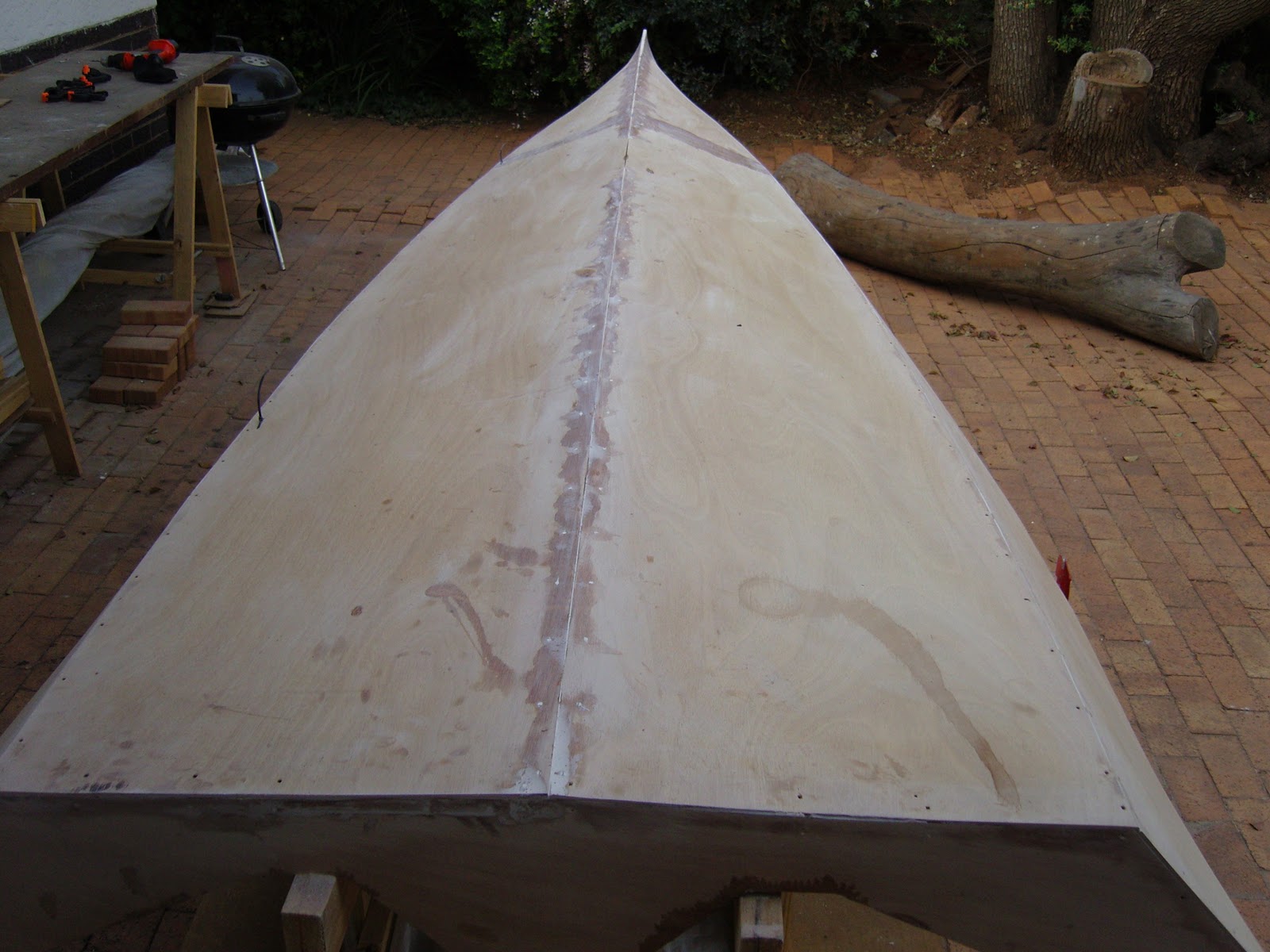
Gregs Didi mini cruise hull build is turned
Wednesday, 6 October 2010
Steering Toylanders in the right direction.
While having the sole South African rights to producing the Toylander from Real Life Toys under a strict licence agreement,we have made some of our own changes as we built our own car,Isuppose its natural development.The first thing was to do away with the 20x 20mm body cleats made from wood,then design in our Finger Joints,making the assembly really easy,now we have our own type of steering wheel too,using the template supplied in the regular builders manual.We made the wheel larger than its 190mm diameter as shown and re did it at 250mm diameter and also cut it in 16mm MDF,which is harder and should be stronger than a wheel in 12mm plywood.
You may choose to round off the corners with a router cutter but the wheel will work well as it is.
Monday, 4 October 2010
Polar Bound at the HBYC marina
We are indeed fortunate to meet many cruising and local sailors,some are here for a day,some stay over our winter,some are starting out,some are part way on a circumnavigation,David Scott Cowper is one such person.He has a very special boat and is about to set off for Australia and another trip through the north west passage.
I was pleased to meet David and took the chance to supply him with some Fluid-Film in a spray can,also in a paste form and asked that if possible he can try it out in the sub zero tempratures he will be in eventually,its said to withstand freezing,I have no way of testing that,David can but he says it will be a year on from now.
Both pictures are by R McBride using a Canon Gll camera on auto settings.
Text below is from the magazine Power and Motor Yacht,many thanks to them and their writer,Alex McMullen.
Roy
Over Russia and Around the World
How one yachtsman plans to circumnavigate the globe—the hard way.
Story by Alex McMullen — February 2002
What do you do for an encore when you’ve already performed four single-handed small-boat circumnavigations, the last one via the fearsome, frozen wasteland of Canada’s Northwest Passage?
Well, if you’re the seasoned British solo yachtsman David Scott Cowper, you set off on yet another circumnavigation of the globe, but this time you take in the 5,000-mile Northern Sea Route, along the north coast of Russia. Here you face the possibility of being stuck in the ice for several months, possibly even for a year or more. And a winter in these latitudes gives you 24-hour darkness and temperatures down to -40°F.
Long fascinated by the Northern Sea Route, Cowper cites as inspiration the Norwegian explorer Fridtjof Nansen, who in 1894 deliberately sailed his ship, the Fram, into the pack ice in what he called (and some people still call) the Northeast Passage. The idea was to gauge the strength of the current that was known to flow northward and westward, carrying the ice with it.
Cowper is the epitome of British reserve, a quiet man as polite and pleasant as you could hope for, but no publicity seeker. His achievement in being the first person to sail around the world in both directions—and briefly to hold the records for fastest single-handed circumnavigations, in both directions—went virtually unnoticed. Nor did his Northwest Passage feats in a motorboat create much interest even though he was the first person to tackle it single-handedly (albeit taking three years to do so) and the first to go around the world by that route.
If he completes his new voyage, Cowper will be the first person to travel single-handedly by the Northern Sea Route and says he will be the first to use it on a circumnavigation. Specifically, he intends to set off from Rosneath, Scotland, around the time you’re reading this, bound for the Azores, then Ascension Island, and then the Falklands, en route to rounding Cape Horn “the wrong way,” against its prevailing, often storm-force winds. Then he will head north up into the Pacific, calling on Valparaiso, Chile, Acapulco, Mexico, and San Francisco, from where he will set course for Dutch Harbour in Alaska’s Aleutian Islands. From here he will aim to get through the Bering Strait and into the Northern Sea Route in July.
Cowper’s first two world-girdling cruises were in a 41-foot sailing yacht, the third and fourth in a 42-foot, wooden ex-lifeboat. For his toughest challenge yet, he has Polar Bound, a new 48-foot motorboat, designed and built not just for ocean going but for survival in pack ice.
Both pictures are by R McBride using a Canon Gll camera on auto settings.
Text below is from the magazine Power and Motor Yacht,many thanks to them and their writer,Alex McMullen.
Roy
Over Russia and Around the World
How one yachtsman plans to circumnavigate the globe—the hard way.
Story by Alex McMullen — February 2002
What do you do for an encore when you’ve already performed four single-handed small-boat circumnavigations, the last one via the fearsome, frozen wasteland of Canada’s Northwest Passage?
Well, if you’re the seasoned British solo yachtsman David Scott Cowper, you set off on yet another circumnavigation of the globe, but this time you take in the 5,000-mile Northern Sea Route, along the north coast of Russia. Here you face the possibility of being stuck in the ice for several months, possibly even for a year or more. And a winter in these latitudes gives you 24-hour darkness and temperatures down to -40°F.
Long fascinated by the Northern Sea Route, Cowper cites as inspiration the Norwegian explorer Fridtjof Nansen, who in 1894 deliberately sailed his ship, the Fram, into the pack ice in what he called (and some people still call) the Northeast Passage. The idea was to gauge the strength of the current that was known to flow northward and westward, carrying the ice with it.
Cowper is the epitome of British reserve, a quiet man as polite and pleasant as you could hope for, but no publicity seeker. His achievement in being the first person to sail around the world in both directions—and briefly to hold the records for fastest single-handed circumnavigations, in both directions—went virtually unnoticed. Nor did his Northwest Passage feats in a motorboat create much interest even though he was the first person to tackle it single-handedly (albeit taking three years to do so) and the first to go around the world by that route.
If he completes his new voyage, Cowper will be the first person to travel single-handedly by the Northern Sea Route and says he will be the first to use it on a circumnavigation. Specifically, he intends to set off from Rosneath, Scotland, around the time you’re reading this, bound for the Azores, then Ascension Island, and then the Falklands, en route to rounding Cape Horn “the wrong way,” against its prevailing, often storm-force winds. Then he will head north up into the Pacific, calling on Valparaiso, Chile, Acapulco, Mexico, and San Francisco, from where he will set course for Dutch Harbour in Alaska’s Aleutian Islands. From here he will aim to get through the Bering Strait and into the Northern Sea Route in July.
Cowper’s first two world-girdling cruises were in a 41-foot sailing yacht, the third and fourth in a 42-foot, wooden ex-lifeboat. For his toughest challenge yet, he has Polar Bound, a new 48-foot motorboat, designed and built not just for ocean going but for survival in pack ice.
Sunday, 3 October 2010
Simply Red
Saturday, 2 October 2010
Toylander kits to Joburg,
These panel sets,there are two,will be going off to Johannesburg next week,with small detail changes to our cut files all the time, we are finding new ways to make our Toylanders even faster to build.
It is now spring in the Cape
Thursday, 30 September 2010
A visit to Palmerston Atoll by HBYC yacht The Road
Hello again,
As promised in our last epistle, I will attempt to impart the experience of our visit to the Palmerston Atoll
Firstly, where the H’—is it? Essentially it is part of the Cook Islands, which comprise of 15 small islands contained within an area of some 750 000 square miles bounded between 08 and 23 degrees south and 156 and 167 degrees west.
These in turn are divided into two sub categories, namely the north and south Cook Islands.
Since 1965 they have the status of being a self governing democratic commonwealth, affiliated with New Zealand. (how is that for a whole lot of Westministerese claptrap) which means that all citizens have Cook Island and New Zealand citizenship, and that New Zealand have sole control of Cook Island Foreign Affairs; Defense; and subsidizes finances.
Palmerston is deemed to be part of the Southern Cook Islands situated as it is at 18-03 south and 163-13 west. The atoll comprises six sandy islets scattered along the coral reef surrounding the lagoon. All in all a pretty lonely place. The privately operated supply ship only visits when the cargo is economically viable. We were fortunate to be present and able to assist in the offloading, when a visitation of this life line occurred, the first for 9 months.
Here comes the real, or is that surreal, side to the story, there are plus minus 70 inhabitants in total on the atoll, all of whom descend from a unique history. They are all descendants of a patriarchal figure, a Lancastrian by the name of William Marsters, who in 1862 settled there with his 3 Polynesian wives. He the proceeded to father 26 children, and divided the islands into sections for the 3 “families”. He also established strict rules regarding intermarriage, and to this day, some of his descendants control the island while the rest live and work in New Zealand and elsewhere in the Cook Islands.
For the visiting yachtsmen, (There is no other way to get there, except by the very irregular supply ship) there is no access into the lagoon if the draft of your vessel is more than 4 feet, so the locals have laid down a series of mooring buoys outside the reef, with each “family” owning their own string of about 4 each. (The numbers fluxuate as new are added, and others removed for maintenance).
Now comes the unique part of the tale, upon arrival within a mile or so of the island, a small craft belonging to one of the families will come out to meet you, guide you to a mooring buoy, assist in tying you to it, and from that moment on, for the duration of your stay, you and all on board are adopted by the family. They ferry you back and forth from ship to shore, they feed you, teach you about all their customs such as fishing, whale watching; coconut harvesting and preparation; catching land crabs; cooking in ground ovens etc. you are taken on tours of the island proudly shown all their infrastructure such as the school, generator plant, water collection system . We were again fortunate in the timing of our arrival, in that for about 4 months of the year, during the nesting period of the “Tropic Bird” population on the adjoining islands, once a month, (our experience was to be the last of the season) all the families collect some of the male chicks, who are at that time still flightless, but paradoxically much larger than their parents. A strict tally is then kept of how many each family is responsible for collecting, and the whole island population meets on the beach at an appointed time share out the birds accordingly. However if there are visiting yachtsmen present, the family who are looking after them is allowed to take one extra bird per visitor from the total captured, and the population in general absorbs the loss in their allowance with good will and smiles all around. Killing, plucking and eventually burning off the residual feathers is then performed with much ceremony, and of course the visitors are expected to partake enthusiastically. Shirley designated herself as official photographer, so deftly avoiding mutilating what she perceived as different manifestations of our pet Parrot Rubbish.
The birds were then cooked overnight in an underground oven, and consumed with great relish after church (attendance compulsory) on Sunday morning.
When, all too quickly, it was time for us to leave these amazingly giving and friendly people, we were presented with gifts of freshly caught fish and coconuts. It must be emphasized that apart from the regulatory levies imposed by the New Zealand’s representative (a very friendly all powerful administrator by the name of Tere) the locals did not expect any form of remuneration, except maybe some flour, salt or such, that we had to spare. I got rid of that darned stainless steel chain and convinced Shirley to part with some of that ever present pasta that she likes and I do not.
Should any of you reading this be sailing this way in the future, in our opinion it would be a great loss, in re learning how to treat our fellow man if nothing else, if you fail to stop and enjoy the experience
Well once again that’s about that for that.
Taffy ,Shirley and Rubbish.
Thanks to Wikipedia for the following:
History
Palmerston was discovered by Captain Cook in 1774, but he did not land on the island until 13 April 1777. He found the island uninhabited, though some ancient graves were discovered. Cook named the island after Henry Temple, 2nd Viscount Palmerston, then lord of the admiralty. The ancient name of the island was supposedly Avarau, meaning “two hundred harbours.” In 1863 William Marsters, a ship's carpenter and barrel maker, arrived on Palmerston from Manuae with two Polynesian wives and annexed the island from the British government. He added a 'third wife' and sired a large family of some 23 children, whose descendants now inhabit Palmerston. Thus, Palmerston Island is the only island in the Cook Islands for which English is the native language.
William Masters is said to have originally come from Leicestershire England, and his descendants now spell the name "Marsters", possibly due to the Leicestershire accent. By the time his youngest daughter Titana Tangi died in 1973, there were over a thousand Marsters descendants living in Rarotonga and New Zealand. Though only some fifty family members remain on Palmerston, all Marsters descendants consider the island their ancestral home. In 1954 the family was granted full ownership of the island. Three branches of the family remain on Palmerston, each branch being descended from one of Williams 'three wives', marriage within a family group is prohibited.[1] Palmerston is now administered by the Cook Islands government in association with New Zealand.
As promised in our last epistle, I will attempt to impart the experience of our visit to the Palmerston Atoll
Firstly, where the H’—is it? Essentially it is part of the Cook Islands, which comprise of 15 small islands contained within an area of some 750 000 square miles bounded between 08 and 23 degrees south and 156 and 167 degrees west.
These in turn are divided into two sub categories, namely the north and south Cook Islands.
Since 1965 they have the status of being a self governing democratic commonwealth, affiliated with New Zealand. (how is that for a whole lot of Westministerese claptrap) which means that all citizens have Cook Island and New Zealand citizenship, and that New Zealand have sole control of Cook Island Foreign Affairs; Defense; and subsidizes finances.
Palmerston is deemed to be part of the Southern Cook Islands situated as it is at 18-03 south and 163-13 west. The atoll comprises six sandy islets scattered along the coral reef surrounding the lagoon. All in all a pretty lonely place. The privately operated supply ship only visits when the cargo is economically viable. We were fortunate to be present and able to assist in the offloading, when a visitation of this life line occurred, the first for 9 months.
Here comes the real, or is that surreal, side to the story, there are plus minus 70 inhabitants in total on the atoll, all of whom descend from a unique history. They are all descendants of a patriarchal figure, a Lancastrian by the name of William Marsters, who in 1862 settled there with his 3 Polynesian wives. He the proceeded to father 26 children, and divided the islands into sections for the 3 “families”. He also established strict rules regarding intermarriage, and to this day, some of his descendants control the island while the rest live and work in New Zealand and elsewhere in the Cook Islands.
For the visiting yachtsmen, (There is no other way to get there, except by the very irregular supply ship) there is no access into the lagoon if the draft of your vessel is more than 4 feet, so the locals have laid down a series of mooring buoys outside the reef, with each “family” owning their own string of about 4 each. (The numbers fluxuate as new are added, and others removed for maintenance).
Now comes the unique part of the tale, upon arrival within a mile or so of the island, a small craft belonging to one of the families will come out to meet you, guide you to a mooring buoy, assist in tying you to it, and from that moment on, for the duration of your stay, you and all on board are adopted by the family. They ferry you back and forth from ship to shore, they feed you, teach you about all their customs such as fishing, whale watching; coconut harvesting and preparation; catching land crabs; cooking in ground ovens etc. you are taken on tours of the island proudly shown all their infrastructure such as the school, generator plant, water collection system . We were again fortunate in the timing of our arrival, in that for about 4 months of the year, during the nesting period of the “Tropic Bird” population on the adjoining islands, once a month, (our experience was to be the last of the season) all the families collect some of the male chicks, who are at that time still flightless, but paradoxically much larger than their parents. A strict tally is then kept of how many each family is responsible for collecting, and the whole island population meets on the beach at an appointed time share out the birds accordingly. However if there are visiting yachtsmen present, the family who are looking after them is allowed to take one extra bird per visitor from the total captured, and the population in general absorbs the loss in their allowance with good will and smiles all around. Killing, plucking and eventually burning off the residual feathers is then performed with much ceremony, and of course the visitors are expected to partake enthusiastically. Shirley designated herself as official photographer, so deftly avoiding mutilating what she perceived as different manifestations of our pet Parrot Rubbish.
The birds were then cooked overnight in an underground oven, and consumed with great relish after church (attendance compulsory) on Sunday morning.
When, all too quickly, it was time for us to leave these amazingly giving and friendly people, we were presented with gifts of freshly caught fish and coconuts. It must be emphasized that apart from the regulatory levies imposed by the New Zealand’s representative (a very friendly all powerful administrator by the name of Tere) the locals did not expect any form of remuneration, except maybe some flour, salt or such, that we had to spare. I got rid of that darned stainless steel chain and convinced Shirley to part with some of that ever present pasta that she likes and I do not.
Should any of you reading this be sailing this way in the future, in our opinion it would be a great loss, in re learning how to treat our fellow man if nothing else, if you fail to stop and enjoy the experience
Well once again that’s about that for that.
Taffy ,Shirley and Rubbish.
Thanks to Wikipedia for the following:
History
Palmerston was discovered by Captain Cook in 1774, but he did not land on the island until 13 April 1777. He found the island uninhabited, though some ancient graves were discovered. Cook named the island after Henry Temple, 2nd Viscount Palmerston, then lord of the admiralty. The ancient name of the island was supposedly Avarau, meaning “two hundred harbours.” In 1863 William Marsters, a ship's carpenter and barrel maker, arrived on Palmerston from Manuae with two Polynesian wives and annexed the island from the British government. He added a 'third wife' and sired a large family of some 23 children, whose descendants now inhabit Palmerston. Thus, Palmerston Island is the only island in the Cook Islands for which English is the native language.
William Masters is said to have originally come from Leicestershire England, and his descendants now spell the name "Marsters", possibly due to the Leicestershire accent. By the time his youngest daughter Titana Tangi died in 1973, there were over a thousand Marsters descendants living in Rarotonga and New Zealand. Though only some fifty family members remain on Palmerston, all Marsters descendants consider the island their ancestral home. In 1954 the family was granted full ownership of the island. Three branches of the family remain on Palmerston, each branch being descended from one of Williams 'three wives', marriage within a family group is prohibited.[1] Palmerston is now administered by the Cook Islands government in association with New Zealand.
Wednesday, 29 September 2010
Toylander brakes fitted and working pictures
Tuesday, 28 September 2010
Brakes on Toylandering
Saturday, 25 September 2010
The Commodore invites you to the HBYC Opening Cruise of 2010!
Hout Bay,
Cape Town,
South Africa.
OPENING CRUISE Saturday 9th October!
( not the 7th as is posted on the HBYC site)
Sailpast at 2pm, Cannons to be fired
Merriment on the water!
Evening party is OKTOBERFEST with OOMPAH BAND, DRAFT BEER and GOOD FOOD!
WE WANT EVERY POSSIBLE BOAT ON THE WATER!!!!!!!!!!!!!!!!
AND EVERY MEMBER PRESENT!!!!!!!!!!!
HBYC hasn't had an opening cruise for years so don't miss it!
HBYC Opening Cruise 9 October 2010
(thank you to Justin for supplying the following)
Traditions of the Sailpast
“The Sailpast tradition began at the First Yacht Club which was formed at Cowes in England nearly 200 years ago. The membership at Cowes was primarily aristocratic and many were familiar with naval practice and tradition. Cowes Yacht Club subsequently changed its name to Royal Yacht Squadron and certain social graces were added to the traditional naval practices.
The actual “review of the fleet” was introduced as a continuation of the naval habit of having Admirals (and/or Royalty) review the fleet on special occasions. Protocol demanded that a flagship be anchored with the Admiral and staff on the quarterdeck to receive and return the salute. Vessels sailed past, dipping their colours in salute, and with their captain, if hatted (which he should be), also saluting with the ship’s company standing at attention. The fleet passing in review would be led by the Vice-Admiral and the final vessel in the line would carry the Rear-Admiral.
The Yacht Club tradition is almost identical, except that the salute is received by the Commodore and/or President instead of the Admiral.
Tradition dictates that all club members participate in the Sailpast, on their own or on another member’s yacht. Good manners require that a member unable to participate will send his/her regrets to the Commodore. “
Sailpast at HBYC
Attendance
1. All vessels are strongly encouraged to attend. Apologies to the Commodore (not recommended)
2. All members are encouraged to attend, and to find their way onto a boat where possible. Skippers will be very obliging.
Venue
1. Sailpast will be held in Hout Bay generally between Ore Jetty and Dunes Mark.
2. The review Vessel taking the Salute will be stationed at Ore Jetty under the East Fort cannons where the Salute will be fired from.
Timing and course
1. The Sailpast is scheduled for Saturday afternoon 9 October.
2. Vessels to launch at approx 13:00 and be “on the water” at Fish on the Rocks by 13:30.
3. On exiting the harbour, vessels should congregate in the vicinity of Fish on the Rocks, ready to leave en masse at 13:45 for the Salute at 14:00 sharp.
4. Timing may be further coordinated by Radio on Channel 71
5. The “bridge boat” will be yacht QUEST on CH-71.
6. The Review Vessel should anchor approximately 500m away from Ore Jetty so that it forms a reaching angle between itself and the Ore Jetty mark, allowing sailing vessels to reach to and from the Ore Jetty mark during the time of the salute.
7. On reaching the Review vessel, yachts should sail sausages around Ore Jetty and the review vessel, leaving them each to port.
8. At the time of the Salute (14:00) East Fort cannon will sound. Yachts should respond acknowledge with as much noise as they can, using whistles, vuvuzelas, foghorns, etc. Flag waving and popping of Champagne Corks will be permitted!
9. On passing the review boat, yachts should salute the assembled flag officers (Commodore and President) in a formal and dignified manner, with more flag waving, streamers, sound signals. Etc. Please do not use solid objects or any items that may leave plastic bags in the water however! Bear in mind the Review Vessel may respond if unduly threatened!!
10. After rounding the review boat 3x boats should adopt a longer port course circling Dunes, Ore Jetty and the Review vessel, to bring the festivities to the rest of the bay.
11. The Commodore will then “Declare the Bazaar Season Open” on CH-71
Dressing
1. All crew to be dressed in Blue and White
2. Flag Officers to have naval caps and disposable blazers
3. Yachts to display as much bunting as possible!
Notes
• Engines may be used to keep pace and hold position.
• If a strong wind is blowing, yachts should sail under jib alone.
• Prepare to have a jolly sail around the bay during the afternoon with good refreshments and company (and cameras)!!!
• Please uphold good sea-keeping and safety at all times. Look out for other vessels at close quarters, and do not collide with the review vessel!
Cape Town,
South Africa.
OPENING CRUISE Saturday 9th October!
( not the 7th as is posted on the HBYC site)
Sailpast at 2pm, Cannons to be fired
Merriment on the water!
Evening party is OKTOBERFEST with OOMPAH BAND, DRAFT BEER and GOOD FOOD!
WE WANT EVERY POSSIBLE BOAT ON THE WATER!!!!!!!!!!!!!!!!
AND EVERY MEMBER PRESENT!!!!!!!!!!!
HBYC hasn't had an opening cruise for years so don't miss it!
HBYC Opening Cruise 9 October 2010
(thank you to Justin for supplying the following)
Traditions of the Sailpast
“The Sailpast tradition began at the First Yacht Club which was formed at Cowes in England nearly 200 years ago. The membership at Cowes was primarily aristocratic and many were familiar with naval practice and tradition. Cowes Yacht Club subsequently changed its name to Royal Yacht Squadron and certain social graces were added to the traditional naval practices.
The actual “review of the fleet” was introduced as a continuation of the naval habit of having Admirals (and/or Royalty) review the fleet on special occasions. Protocol demanded that a flagship be anchored with the Admiral and staff on the quarterdeck to receive and return the salute. Vessels sailed past, dipping their colours in salute, and with their captain, if hatted (which he should be), also saluting with the ship’s company standing at attention. The fleet passing in review would be led by the Vice-Admiral and the final vessel in the line would carry the Rear-Admiral.
The Yacht Club tradition is almost identical, except that the salute is received by the Commodore and/or President instead of the Admiral.
Tradition dictates that all club members participate in the Sailpast, on their own or on another member’s yacht. Good manners require that a member unable to participate will send his/her regrets to the Commodore. “
Sailpast at HBYC
Attendance
1. All vessels are strongly encouraged to attend. Apologies to the Commodore (not recommended)
2. All members are encouraged to attend, and to find their way onto a boat where possible. Skippers will be very obliging.
Venue
1. Sailpast will be held in Hout Bay generally between Ore Jetty and Dunes Mark.
2. The review Vessel taking the Salute will be stationed at Ore Jetty under the East Fort cannons where the Salute will be fired from.
Timing and course
1. The Sailpast is scheduled for Saturday afternoon 9 October.
2. Vessels to launch at approx 13:00 and be “on the water” at Fish on the Rocks by 13:30.
3. On exiting the harbour, vessels should congregate in the vicinity of Fish on the Rocks, ready to leave en masse at 13:45 for the Salute at 14:00 sharp.
4. Timing may be further coordinated by Radio on Channel 71
5. The “bridge boat” will be yacht QUEST on CH-71.
6. The Review Vessel should anchor approximately 500m away from Ore Jetty so that it forms a reaching angle between itself and the Ore Jetty mark, allowing sailing vessels to reach to and from the Ore Jetty mark during the time of the salute.
7. On reaching the Review vessel, yachts should sail sausages around Ore Jetty and the review vessel, leaving them each to port.
8. At the time of the Salute (14:00) East Fort cannon will sound. Yachts should respond acknowledge with as much noise as they can, using whistles, vuvuzelas, foghorns, etc. Flag waving and popping of Champagne Corks will be permitted!
9. On passing the review boat, yachts should salute the assembled flag officers (Commodore and President) in a formal and dignified manner, with more flag waving, streamers, sound signals. Etc. Please do not use solid objects or any items that may leave plastic bags in the water however! Bear in mind the Review Vessel may respond if unduly threatened!!
10. After rounding the review boat 3x boats should adopt a longer port course circling Dunes, Ore Jetty and the Review vessel, to bring the festivities to the rest of the bay.
11. The Commodore will then “Declare the Bazaar Season Open” on CH-71
Dressing
1. All crew to be dressed in Blue and White
2. Flag Officers to have naval caps and disposable blazers
3. Yachts to display as much bunting as possible!
Notes
• Engines may be used to keep pace and hold position.
• If a strong wind is blowing, yachts should sail under jib alone.
• Prepare to have a jolly sail around the bay during the afternoon with good refreshments and company (and cameras)!!!
• Please uphold good sea-keeping and safety at all times. Look out for other vessels at close quarters, and do not collide with the review vessel!
Friday, 24 September 2010
Caigs Paper Jet 14 build
Dudley Dix tells me he has now sold over 80 sets of plans world wide,we have done quite a few of those as kits,including hull number 1 which is Dudleys own boat,some news just in from Craig who is one of our customers is below.
Hi Roy
Thought I would drop you a Mail regarding progress on my Paper Jet build. Progress is a bit slow but I am enjoying the process and manage an hour or two every couple of days. I the kit is fantastic and I am learning as I go with the help of Dudley's detailed instructions, I have had a couple of mishaps along the way but fortunately nothing serious and it has all been a good hands on learning experience. (My ultimate goal is to build something a little bigger, I like the look of Dudley's new design the Didi 28 I think.)
The fact that I have to build outside has also slowed things up a bit and now that the rainy season is about to start we will have to maybe make another plan.
I have set up a blog for my friends that are overseas to follow progress (www.cdpboatworks.blogspot.com)
Cheers
Craig
Tuesday, 21 September 2010
The Toylanders Dashboard
Toylandering
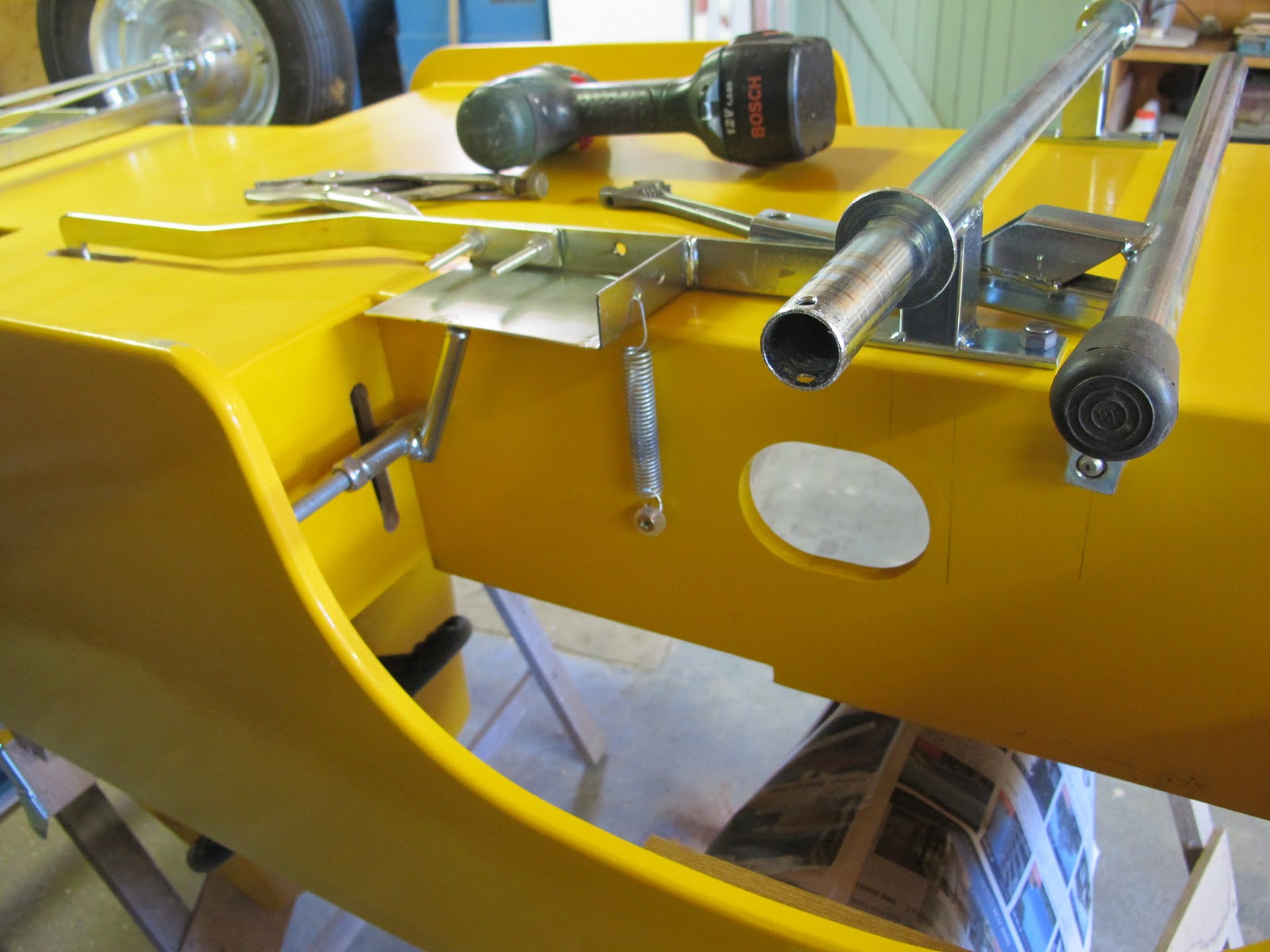
Which may be a new word but its a decent way of naming the continued construction of our so called 'Works Car' or Toylander,one of quite a few in build in South Africa now,you can buy our kit or just the plans set if you want,at just R565 including vat and postage its a good buy with over 75 A4 pages to help you build your own Toylander.We are now onto the mechanics,six 12volt dc motors and 24:1 gear boxes are on back order for customers and our own use,soon we will have our Toylander driving around the garden.
We are now doing some small items that I must admit ecaped my eye when doing our own build,read the plans,who ever reads the plans? I hope my pictures will explain what was missed,no big deal but I now have to spray paint the panels I missed...........
The Atkin Ingrid 38 Brer Terrapin lives on!
News in today tells me the boat that was said to be wrecked and lost in New York,circa 1979 was actually raised and lived on to sail again,the question is now where is she?
From Alan,another Brer Terrapin owner:
It's been along time since I smiled as hard as I did when I saw your post on the Brer Terrapin. Where was the internet back in the 1980s when I had to write letters to the South African Consulate to get confirmation that there were no leans or encumbrances on the Brer Terrapin so I could Register her in the US and letters to the Cruising Club of Cape Town to try and find out something about her history,nothing from either.


This is myself back in 1977 on the crossing from Cape Town to Salvador,Brasil on the same boat.
I purchased her cheap in 1983 from a guy in Stamford, Connecticut. She had gone up on some rocks during a storm in 1979 and sunk in about 10 feet of water. When I bought her the hull had been repaired and the Volvo rebuilt, but the aft end insides where gutted and trashed, everything was moldy and full of silt, the wiring pulled out and there were some other issues but she was salvageable. And some of the amazing details under the dirt and silt like the green stone sink in the bog and the carved terrapin made it feel like she still had life in her. Some mid-restoration photos attached.
I spent the next few years getting allot of the work done and sailing around between NY and New England. Lived on her (most of the time) while I finished school in Long Island. Also in that time a wife, kids and real job came along and in 1991 I sold her cheep to an Irishman named Cornelius Callahan who's plan was to sail her back home. Never did find out if he made it.
Thanks for filling in so many of the pieces. I have some more photos and would be happy to give more details to anyone interested. Fair Winds....

We also recieved this information from Ian Allan down in Picton,New Zealand,the Peter he referes to is Peter Horsford who did the return trip back from Rio de Janerio to Cape Town,South Africa.
Hi Roy, what a delight to get that letter about BrerTerrapin. I had a peep at the photos but want to study them in more detail later. Peter is not here presently as he and Cathy went down to Dunedin and Lake Wanaka and should ease up this way again in a week or so and I'll show him all this. He'll be fascinated.
I know a bit about the boat too. I met Pip Smith, the owner/builder when he had the boat on the market and had a long yarn with him. He seemed pretty dejected by selling and later, very sadly, topped himself. He had sailed the boat to Rio in the hopes of carrying on to the Med, he told me, so he could visit historic places and have a leisurely cruise. However his wife wouldn't have any of it and I think that's what got to him because he said very sadly and rather sarcastically to me, 'oh, I guess I'll be happy mowing the grass on my quarter acre!'
He was a doctor and told me how he had played in a band whilst he studied to earn the funds to build Brer Terrapin himself - I think with some help from his dad. What a job he did too!
Well, he sold the boat to Peter's mate (and ours too), Gerald Broom. Gerald had built himself a gorgeous little Buccaneer and sailed it a lot with Peter in False Bay. He sold that and after a few years, of course, had a hankering for another boat. He bought Brer Terrapin and did quite a lot of small jobs on her sprucing her up and Peter sailed regularly with him and I went out quite often with them too. Then Peter sailed with Gerald and a couple of others on the 1976 Rio Race (I don't think in the race as such but at a similar time) - the same one we sailed Jenny Wren over. We met over there and Gerald had in the meantime announced that he had sold the boat to an arbourist from Cape Town - and you know the rest. Gerald flew back to Cape Town and as Peter had promised him that he would sail the boat back to Cape Town, he stayed on to do that as I think the crew were relatively inexperienced.
That's the story up to date, Roy. I remember seeing Brer Terrapin for sale in a British yachting magazine in the 70's I think, and that is likely when the guy who took her to The States bought her.
Hope this helps.
Cheers,
Ian
From Alan,another Brer Terrapin owner:
It's been along time since I smiled as hard as I did when I saw your post on the Brer Terrapin. Where was the internet back in the 1980s when I had to write letters to the South African Consulate to get confirmation that there were no leans or encumbrances on the Brer Terrapin so I could Register her in the US and letters to the Cruising Club of Cape Town to try and find out something about her history,nothing from either.


This is myself back in 1977 on the crossing from Cape Town to Salvador,Brasil on the same boat. I purchased her cheap in 1983 from a guy in Stamford, Connecticut. She had gone up on some rocks during a storm in 1979 and sunk in about 10 feet of water. When I bought her the hull had been repaired and the Volvo rebuilt, but the aft end insides where gutted and trashed, everything was moldy and full of silt, the wiring pulled out and there were some other issues but she was salvageable. And some of the amazing details under the dirt and silt like the green stone sink in the bog and the carved terrapin made it feel like she still had life in her. Some mid-restoration photos attached.
I spent the next few years getting allot of the work done and sailing around between NY and New England. Lived on her (most of the time) while I finished school in Long Island. Also in that time a wife, kids and real job came along and in 1991 I sold her cheep to an Irishman named Cornelius Callahan who's plan was to sail her back home. Never did find out if he made it.
Thanks for filling in so many of the pieces. I have some more photos and would be happy to give more details to anyone interested. Fair Winds....

We also recieved this information from Ian Allan down in Picton,New Zealand,the Peter he referes to is Peter Horsford who did the return trip back from Rio de Janerio to Cape Town,South Africa.
Hi Roy, what a delight to get that letter about BrerTerrapin. I had a peep at the photos but want to study them in more detail later. Peter is not here presently as he and Cathy went down to Dunedin and Lake Wanaka and should ease up this way again in a week or so and I'll show him all this. He'll be fascinated.
I know a bit about the boat too. I met Pip Smith, the owner/builder when he had the boat on the market and had a long yarn with him. He seemed pretty dejected by selling and later, very sadly, topped himself. He had sailed the boat to Rio in the hopes of carrying on to the Med, he told me, so he could visit historic places and have a leisurely cruise. However his wife wouldn't have any of it and I think that's what got to him because he said very sadly and rather sarcastically to me, 'oh, I guess I'll be happy mowing the grass on my quarter acre!'
He was a doctor and told me how he had played in a band whilst he studied to earn the funds to build Brer Terrapin himself - I think with some help from his dad. What a job he did too!
Well, he sold the boat to Peter's mate (and ours too), Gerald Broom. Gerald had built himself a gorgeous little Buccaneer and sailed it a lot with Peter in False Bay. He sold that and after a few years, of course, had a hankering for another boat. He bought Brer Terrapin and did quite a lot of small jobs on her sprucing her up and Peter sailed regularly with him and I went out quite often with them too. Then Peter sailed with Gerald and a couple of others on the 1976 Rio Race (I don't think in the race as such but at a similar time) - the same one we sailed Jenny Wren over. We met over there and Gerald had in the meantime announced that he had sold the boat to an arbourist from Cape Town - and you know the rest. Gerald flew back to Cape Town and as Peter had promised him that he would sail the boat back to Cape Town, he stayed on to do that as I think the crew were relatively inexperienced.
That's the story up to date, Roy. I remember seeing Brer Terrapin for sale in a British yachting magazine in the 70's I think, and that is likely when the guy who took her to The States bought her.
Hope this helps.
Cheers,
Ian
Terrapin,a one horse barge
112B - Terrapin - Horse Boat 21 - Portadown 1873
13 October 2008
She was built in 1873 at Portadown Foundry as a horse drawn boat. She worked on the Royal and had Royal number 21 and was known as "Black Swan", Its not known how she ended up on the Royal as she is a 60ft boat and Royal Canal boats were 70ft.
In the 1920's she was sold off to John Roche and began trading on the Grand Canal as 112B. He sold it on to M. Dowling in Dublin. Denis Lynch of Garrykennedy bought her in June 1949 for the sum of £40 including the horse. Denis sometime later positioned her on the cill of Meelick Lock and had her stern cut out to take a stern tube and propeller shaft. A Bolinder engine was then fitted. She was then used as a Hack Boat on the Shannon carrying various cargos such as Slate from the quarries in Portroe, Turf during the summer and Corn in the harvest.
In 1961 Ken Simmons bought her and lived aboard with his family, after conversion until the early 1990's. Ken was suffering from failing health at that time so he became a land lubber so the Terrapin fell into disrepair. Ken sold her in 1996. As she had no working engine and she was based in Killaloe he towed her for the new owner to Tuamgraney. Enthusiasm got the better of the new owner who stripped her out finding as he went along, the more he ripped the further he had to go. Eventually he ended up with a bare hull. During the winter of 1998, the Terrapin sank in Tuamgraney. The following Summer, as she was a hazard to navigation, she was removed by Duchas (now Waterways Ireland) and brought to their Portumna depot.
It was from there that Martin and Mary O'Rourke the current owners bought her a few years later. They took her by road to Tullamore and have her on display beside the Round Lock House (Lock 26 on the Grand Canal) which they also own.
13 October 2008
She was built in 1873 at Portadown Foundry as a horse drawn boat. She worked on the Royal and had Royal number 21 and was known as "Black Swan", Its not known how she ended up on the Royal as she is a 60ft boat and Royal Canal boats were 70ft.
In the 1920's she was sold off to John Roche and began trading on the Grand Canal as 112B. He sold it on to M. Dowling in Dublin. Denis Lynch of Garrykennedy bought her in June 1949 for the sum of £40 including the horse. Denis sometime later positioned her on the cill of Meelick Lock and had her stern cut out to take a stern tube and propeller shaft. A Bolinder engine was then fitted. She was then used as a Hack Boat on the Shannon carrying various cargos such as Slate from the quarries in Portroe, Turf during the summer and Corn in the harvest.
In 1961 Ken Simmons bought her and lived aboard with his family, after conversion until the early 1990's. Ken was suffering from failing health at that time so he became a land lubber so the Terrapin fell into disrepair. Ken sold her in 1996. As she had no working engine and she was based in Killaloe he towed her for the new owner to Tuamgraney. Enthusiasm got the better of the new owner who stripped her out finding as he went along, the more he ripped the further he had to go. Eventually he ended up with a bare hull. During the winter of 1998, the Terrapin sank in Tuamgraney. The following Summer, as she was a hazard to navigation, she was removed by Duchas (now Waterways Ireland) and brought to their Portumna depot.
It was from there that Martin and Mary O'Rourke the current owners bought her a few years later. They took her by road to Tullamore and have her on display beside the Round Lock House (Lock 26 on the Grand Canal) which they also own.
Subscribe to:
Posts (Atom)