Monday 13 July 2009

Our Optimist CNC cut panels


This is part of what comes with an Optimist kit,we optimise (no pun intended) the plys to get the best from each panel,both in lay out and strength from the grain directons.

The Gothenburg,another wooden ship we found in Hout Bay


This one was special (they all are) we knew it was expected,as it was to be welcomed into the bay to re enact the attack around 210 years back, by the French on the bays two cannon forts.When the ship came in it would start firing and then be repelled by both East and West Forts Cannons.Wow! what an event,so special,so live,so un expected,we can live a life time and never witness live cannon fire from cannon hundreds of years old.

Roy

Sunday 12 July 2009

In the Sudan,small boy with a camel.


I took this picture on a day off while on a one year work contract in the Sudan,the boy is nomadic and his family and many animals would often pass through our farm on their travels.The camera was my Canon FT with a 200mm tele lens and Kodaks proffesional Ektachrome slide film.
Copyright is to Roy McBride

Saturday 11 July 2009

The De Naming Ceremony by John Vigor,journalist


The De-Naming Ceremony

I once met a man in Florida who told me he'd owned 24 different yachts and renamed every single one of them.
"Did it bring you bad luck?" I asked.
"Not that I'm aware of," he said. "You don't believe in those old superstitions, do you?'
"Well, yes," I said. "As a matter of fact, I do. And so do a lot of other sailors who wouldn't consciously do anything to annoy the ancient gods of wind and sea. Out there, you need all the help you can get."
Actually, I've come to the conclusion that it's not so much being superstitious as being careful. It's part of good seamanship. That's why I had to invent a 'de-naming' ceremony some years ago to ward off bad luck when I wanted to change the name of my new 31-ft sloop from 'Our Way' to 'Freelance'.

I needed a formal ceremony to wipe the slate clean in preparation for the renaming. I searched in vain for one. But research showed that such a ceremony would consist of five parts: an invocation, an expression of gratitiude, a supplication, a rededication and a libation.

So I sat down and wrote my own ceremony. It worked perfectly. 'Freelance' carried us thousands of deep-sea miles and enjoyed good luck all the way.

The ceremony should be read with flair on the foredeck before a gathering of distinguished guests. Or it can be mumbled down below by the skipper alone if he or she finds these things embarassing.

The libation part, however, must be carried out at the bow, as was the original naming ceremony. And I would advise you to use nothing but the finest champagne and to pour it all on the boat. One thing the gods of the sea despise most is meanness, so don't try to do this part on the cheap.

How much time should you leave between the de-naming ceremony and the new-naming ceremony? There's no fixed limit. You can do the renaming right after the de-naming, if you want. But I'd prefer to see a gap of at least 24 hours to allow the demons time to clear out.
Oh, and one other thing - you have to remove all physical traces of the boat's old name before the de-naming ceremony. There may be official papers with the old name on them, of course. If you can't destroy them you should at least keep them well out of sight in a locker during the ceremony. But don't neglect to wipe the name out in obvious place - bow, stern, dinghy, oars, logbook, lifering, charts and so on. Likewise, do not lace the new name anywhere on the boat before the de-naming ceremony is carried out. Hoo-boy, that would be tempting fate.

The ceremony:
"In the name of all who have sailed aboard this vessel in the past, and all who may sail aboard her in the future, we invoke the ancient gods of wind and sea to favor us with their blessing today.
"Mighty Neptune, king of all that moves on the waves, and might Aeolus, guardian of the winds and all that blows before them: we offer you our thanks for the protection you have afforded this vessel in the past. We voice our gratitude that she has always found shelter from tempest and storm and enjoyed safe passage to port.
"Now, therefore, we submit this supplication, that the name whereby this vessel has hitherto been known, '_________', be struck and removed from your records. Further, we ask that when she is again presented for blessing with another name, she shall be recognized and shall be accorded once again the self-same priveleges she previously enjoyed.
"In return for this, we rededicate this vessel to thy domain in full knowledge that she shall be subject to the immutable laws of the gods of wind and sea.
"In consequence whereof, and in good faith, we seal this pact with a libation offered according to the hallowed ritual of the sea.
Now pop the cork, shake the bottle and spray the whole of the content over the bow. Then go quietly below and enjoy the other bottle yourselves.

- John Vigor


Professional

John is the author of 12 boating books and scores of articles in boating magazines on three continents, including Cruising World, Sail, and Good Old Boat. His career as a newspaperman spanned nearly 40 years in America, England, and South Africa. He has written more than 5,000 humor columns and more than 2,000 editorials for metro daily newspapers. He is now a copy editor for Good Old Boat magazine.

Personal:

John Vigor was born in Plymouth, England, but emigrated to South Africa with his family at age 13. After being trained there as a newspaper reporter and photographer, he returned to England to gain experience of British journalism. He joined a paper in Maidstone, Kent, and there met his American-born wife, June, a journalist working for the same paper. They married in Maidstone and later moved to Durban, South Africa, where they raised three sons.

In 1987, John sailed from South Africa to the United States on his 30-foot sloop with June and their youngest son, Kevin, then 17. The story behind that stressful six-month voyage is recounted in his acclaimed book, Small Boat to Freedom.
John is now an American citizen living in Bellingham, Washington. He recently completed a solo-circumnavigation of Vancouver Island in his 27-foot Cape Dory sailboat, Sangoma.

Footnote:

John had a reason for departing South Africa,in a published story,probably SA Yachting? which I still remember reading,he tells of doing some maintainance on his Durban home.He was either painting or plastering his front wall,when an african man came by,he asked to be given the job to do,John said it was not possible,as he could not afford to pay for labour.Some time later,the wall was defaced,John decided after this to depart South Africa.Some while after sailing from RCYC in Cape Town,he did SA yachts persons a what I feel was a dirty move,John wrote about yachts sailing off from SA with Kruger Rand gold coins in their keels, I doubt customs took kindly to this,if in fact it was the truth? It did of course spice up Johns story!

Trekka and John Guzwell


Photo Courtesy John Guzwell

Fifty years ago, a 29-year-old singlehander from Victoria, BC, named John Guzzwell completed an unprecedented circumnavigation aboard Trekka, a 21-ft wooden yawl he'd built with his own hands. At the time, Trekka was the smallest boat ever to have gone around. The book he published about his adventures, Trekka Round the World, became a cult classic among would-be voyagers, and is credited for sparking the dreams of many who have circumnavigated since. John Guzwell, at 29, sailed Trekka around the world.

This was a report in Latitude 38 magazine,they held a meeting in Johns honour.
In a sport often dominated by massive egos, John Guzwell is a refreshingly humble hero who normally shuns the spotlight. So we are thrilled that he has graciously offered to share insights from his lifetime of voyaging and custom boatbuilding. He'll show vintage Southern Ocean film footage shot while accompanying Miles and Beryl Smeeton on their ill-fated Cape Horn attempt aboard Tzu Hang in 1957 — chronicled in another sailors' classic, Once is Enough. If you haven't had the pleasure of reading it, let us explain that the threesome got caught in a horrendous storm that pitchpoled Tzu Hang and dismasted her. Thanks to John's carpentry skills, they finally arrived safely in Chile after 87 days at sea.

John contacted CKD Boats last year,he was asking about our Didi 26 design by Dudley Dix.

Friday 10 July 2009

The wooden craft of Hout Bay continues

Left click this picture for a larger view.

This is a picture I took while in Portsmouths Naval Dockyard,it was stuck away in a bit of a dark corner,hence the low picture quality.Its a model of the Ton class mine sweeper,in this case its all made from wood,in the actual full size build,the frames you can see were all made from alloy I beams,thats a lot of metal!


HMS Glasserton.

How about this one,we had our very own Mine Sweeper in the harbour at one time,when the SA Navy put the Pretoria up for sale,Charles Bates bought it for personal use and kept it moored on a quay in the harbour.

The design is called the Ton class,named such as each boat built was named after a town in Britain which had a name ending with Ton,such as Castleton or Skipton,etc,many were built from around 1957.I have first hand knowledge of the design and used to supply the SA Navy with the correct quality of African Mahogany (khaya),it had to be kiln dry and with lengths to six meters,this replicated what the British Navy had originaly specified.

The boats were made from an alloy I beam frame,spaced about 16 inches apart,then planked with layers of mahogany,both one inch and two inch thick,so the final thickness of the hull was three inches (75mm)the boat was a bit of a battery as all planks were bolted to the alloy frames with galvanised steel bolts! They were supposed to last the second world war only,so I expect this was allowed for,now fifty years on they are still to be seen.

Then and now,some history:

SAS Pretoria, P1556, M1144 (ex HMS Dunkerton; ex HMS Golden Firefly) - museum ship in Hout Bay,now to be found in Cape Towns V&A Waterfront and renamed Madiba.

Thursday 09 July 2009

Yacht Blue Leopard

Blue Leopard at at anchor,not in Hout Bay I might add,just check out the lines of this yacht,stunning for sure.

This picture is also not in Hout Bay!

We are fortunate to see many yachts of all sizes enter Hout Bay,South Africa, where I live. One of the largest,if not the largest, happens to be a yacht designed by Laurent Giles and launched in 1963,she was a ground breaker at the time,light weight and fast,faster than expected I remember,she is of course a wooden yacht.

Length Overall (m): 34.10 Length Overall (ft): 111.88
Length On Deck (m): Length On Deck (ft):
Length Waterline (m): Length Waterline (ft):
Beam (m): 5.80 Beam (ft): 19.03
Draught Max (m): 3.25 Draught Max (ft): 10.66
Draught Min (m): Draught Min (ft):

Built by Wm,Osbourne and sons

Blue Leopard – A personal perspective by John Duffy

Designed by Jack Giles, Blue Leopard was built in Littlehampton, U.K. in 1963. The brief was to produce a gentleman's yacht with a combination of unique features, which would make her lightweight, fast and easily handled by a small crew. With a double diagonal planked hull and an aluminium deck and superstructure, for her years she was a triumph in yacht design, the perfect blend of sail and power, capable of astonishing speed under power yet equally fast under sail. At 112 feet she has a surprisingly narrow beam of 19 foot. The twin Rolls Royce diesels are capable of taking her to almost the same speed under power as under sail.

Time and tide,the sextant and its timer


I have used this pair on two South Atlantic voyages,my chief cook and navigator,Notty, started off by using a much favoured yacht sextant in alloy,even when marketed as a light weight yachtsmans sextant,the weight was still an issue,doing a number of tests,one sextant against the other,the differences were found to be so small that Notty only used my Davis plastic sextant from then on,its a quality made tool I must say.

Wednesday 08 July 2009

Brasilian chart of Atol Das Rocas,from a chart of 1963

Left click the chart to view full size.

This is one of those places that when your going there you had better have a chart but how do you find one? (you just have) This place is probably the only coral atol in the South Atlantic,I say coral,as its all over the island,whats underneath may be rock?
We stayed her for a few days,the British Admiralty Pilot book advised of ship wrecks,rats,scorpions,and lice,we saw all of those excepting the rats!

Please take head of the warnings and restrictions as noted on this chart!

Ians Little Boat progress


This is a Cape Cutter 19 build,we sold the last kit we had to Ian in Picton,New Zealand,Ian is progressing well,he has a great work shop full of tools right next to his home,very handy!

Tuesday 07 July 2009

Wanted B&G Network GPS 12 Instrument Control


This is the GPS control unit wanted.

This is the full set up,the unit center page that is the main control would be good to have as a back up.

Does anyone have one of these for sale or trade? if so contact me at

roy@comlumber.com other Network instruments also considered.

Boat Bits Pages


This is to be found on a site we have no actual link with,excepting a common cause perhaps?

A sailing blog : Random thoughts and rants on boat design, boat building, and other boat bits...
Monday, July 06, 2009
masts and rigging for the real world...

Sadly these days a lot of things cost silly money and more than their share has the word "marine" attached!

For those of us firmly in the cheap seats, there are a lot of ways to bring costs down but I'm always surprised at just how expensive some stuff can be...

Take masts and rigging for instance! Seriously silly prices get thrown around for what is really just aluminum tubes and wire. Now in the cheap seats of course we know that we NEVER buy industrial stuff (like wire) from a purveyor of marine goods. Buying it from Acme wire who may not know a boat from a hole in the wall but certainly DO KNOW wire, is even more important because they are not in the world of silly marine pricing. They sell wire and other rigging stuff for what it's worth not what they can gouge which is often a huge difference!

The same line of thinking goes for chainplates and suchlike... Now that just about every city has some sort of CNC metal cutting operation you can make a drawing give it to a guy and have a perfectly cut and polished chainplate for just a little more than the cost of the metal value. I won't even mention the obscene pricing the last time I looked at chainplates from a marine store...

Masts, being low volume products with seriously high tooling costs are pretty silly price wise but you have to wonder how various mast builders always seem to have brand name masts with maybe a little scratch or cosmetic blemish in the anodizing for 10% of the retail price. Of course with masts being just hollow tubes there are all sorts of alternatives to marine industry spars... I've known more folks who built boats and wound up with light poles and suchlike that worked out just fine at a fraction of what it would cost to buy something from Francespar or the like.

Dudley Dix and CKD boats are even doing mast kits in... (Dare I say it?) ... Wood!

It might suprise a lot of folks but wood works real well for masts and in these days of epoxy and other evil chemicals, no longer falls prey to 99% of all the negative press... Check it out!

Notice to Mariners heading to Fortaleza,Brasil

This is the chartlet posted on the Marina Park Hotel web site,todays date is 7th July 2009,they have been asked to change the entry but have not seen fit,DO NOT USE THIS FOR NAVIGATION,just eye ball the pictures and the chart,you will soon see what I mean.

Note,this is for information only,it is up to the mariner himself to check out postitions and bearings.

Left click chart to enlarge.

Left click this picture to view in a larger size,then cast your eye along the red arrow line,its basically the same approach course as the chartlet gives above!

Ship wreck, Mara Hope,its position,the marina.

This picture does show a bouy,does it light up at night I wonder?

Hard to miss,in day light anyway.

Whats left of the wreck,the other half is still under the water I assume,its hidden from view.

The view of the wreck from the marina.

My 2009/1 copy of Flying Fish,the Journal of the Ocean Cruising club high lights a very near miss when a yacht was heading for the Marina Hotel,Fortaleza,Brasil one night,using a chartlet from the hotels own web site they almost piled up on this well known (to locals) ship wreck,the charts are incorrect too it seems?

Radius chine laminate on one of our kits

Left click the picture to see all the details.

This picture is from John in Salisbury,England,he is making good progress with closing off the hull skins,here he is dry fitting strips of 4mm marine ply,this is the first layer of the two he will fit,as we suggested,he is dry fitting each side,its about 46 strips,then he will remove them five or six at a time,apply glue and screw them back in position again,when the glue has dried,the screws will be removed and he will restart the process,it goes very quickly.

Sunday 05 July 2009

Mast kits

This mast section is taken from one of Dudley Dix's mast drawings,he supplies the design work for many parts of the rig,in full detail,we can supply the parts as a kit.


This drawing is copyright to Dix Design and may not be copied or used without prior permision.

We have won boat kit orders over in the past by supplying mast kits in wood as against alloy,I wont even mention carbon,the cost is just outrageous!Its worth mentioning that before alloy we only ever had wood spars,many are still standing of course,trees manage in strong winds without the assistance of steel wire supports,so when we use wood and add the stainless wires,we are well up strength wise.

The worlds economy is pushing up the cost of many raw materials,plastics and metal are prime targets,this sees alloy becoming an expensive option,witnessed by the very high cost to masts made from the stuff.

Re enter wooden masts? So why not and what if we pulled a few tricks and used the wood as an element but then add some fancy componants,like 316 stainless steel and carbon fibre,plus Harken or Antal mast tracks complete with batten cars,when the mast is painted,fitted out and raised,you wont even know it has a timber core but you will have a lot of cash left to buy your North Sails!

We are working together with the yacht designer Dudley Dix on this,he has done a lot of fine work on masts to suit his designs,one drawing we have shows the fractional rig for his Didi 38 range using a sectional box shape for the mast tube,CNC cut stainless steel for tangs and spreader ends,carbon fibre to the two sets of spreaders,an external mast track for the mainsail.

The mast can be shipped as a kit easily of course as no part will exceed 5.5 meters in length,we will supply all materials and batt car track and cars to a manufactuer of your choice.

Saturday 04 July 2009

Hillman Imp dry sump motor,a picture of Johns engine

Left click the picture to see the full details!

This ties in with our regular exports of the full race inlet and exhaust manifolds we are exporting,the car is a Beach formula single seater,it won its class in the USA last year,at this time the manifold we have supplied is not fitted to the engine,just check out Johns preperation!

Christmas on Hout Bays YC marina

This picture is titled 'Christmas at Home',thats a very small Janet McBride in the cockpit and her mother Jean, standing on the dock,the boat is our first 'Endurance 37',named Ocean Planet,we had just sailed around from our RCYC marina in Cape Town.Left click the picture to view full screen size.


Ok,its some time back but this picture taken by me with my trusty Canon FT SLR camera, is just as valid now as then,its that cruising family life many aspire to,some never make it,some just for a short time but its the adventure that keeps the dream going!

Friday 03 July 2009

June too Soon,October its over

Left click to view full size and read it.


This is a reminder of what the hurricane season is all about,while we were in Trinidad at the TTYA (Trinidad and Tobago Yachting Association) we were handed this A4sheet as a reminder as to where we were in the world.

Thursday 02 July 2009

Motor boat design by Justin

This idea may soon be our next ply/epoxy kit offering,we will do the boats interior too,a very simple construction method prooven by all the boat kits we have produced to date.


This continues on the idea of the Commuter power boat,this design is not complete,its a proposal for a craft sized forty feet long and ten feet wide,with nothing cast in concrete as fas as the sizes are concerned,we know this type of craft has a future as a weekender but also as a retirement home.

Justin comments:

Hi Roy - been entertaining myself with this concept of a 40ft powercruiser.

Long and thin - I think she will be quite agile and easy to build in hard chines, with a box keel.

Selling points would be:

Economical to build and operate
Offers a lot of accommodation for her size. Two versions are shown - one has an extra aft cabin for guests/chartering.
Traditional looks
Ideal for Med, European rivers, and Intra-coastal waterway.
Long range - about 2-4 k n.m depending on tankage.
Quite comfortable for a motor cruiser - limited rolling.
Light and airy saloons
Very quiet underway It wouldn't be hard to make this boat unsinkable and fully self-righting. Need to do the tricky work on hulls etc before I can prove this though
I also suspect she would sail suprisingly well off the wind with the features of a sharpie (allowing for limited reserve stability, small rudder and large fixed prop). Though this is not the design objective at all . . .


Cheers The "40' Light Cruiser" was conceived as a yachtsman's alternative to a sailboat for cruising grounds in the Med, Baltic, perhaps the West Coast of Scotland -alternatively the Intra Coastal Water way, the Caribbean or similar. She is intended as a very economical displacement boat, capable of 6-7 kts on a single economical 50Hp engine. Sketches shown are concept drawings for a a simple and easily constructed hull. The hull form is not finalised yet, but will be based on an advanced sharpie concept, with a box-keel, and moderate deadrise. This will keep the weights very low, for good reserve stability and reduced rolling, while allowing the engine to be sunk low into the keel, with a near-horizontal shaft angle. The keel itself will be metal-plated below allowing grounding and shoal draft cruising. While most economical at hull speeds, this type of hull-form can easily be moved at semi-displacement speeds of up to about 20 kts without much bother, but initial design intention is purely for economy, safety, ease of construction, and low cost.

Normally, this design brief results in a light trawler boat concept. However, it is intended the sharpie hull will offer simpler construction, lower cost, better looks, less windage etc. Possibly less rolling too but this needs to be assessed once a design is available.

Compared with a sailboat, the advantages of this kind of vessel include:
- ideal for rivers, bridges, canals, and shoal-draft estuaries etc
- allows voyaging in ideal weather conditions (don't have to wait for the wind)
- easy short-handed cruising (retired couple)
- easily beached or grounded on box-keel for maintenance
- ability to see out through cabin windows at eye-level
- low cost of construction (no rig or keel required)
- easily stored on land in hurricane season (low and flat)
- easily constructed in marine ply with no complex curves

Sharpies of this nature start to make sense at 40' LOA. Due to their flat underbodies, sufficient headroom is not easily achieved on shorter vessels, unless they become very high and slab-sided. At 40' (perhaps 39' for licensing reasons and mooring costs) - they start to offer generous accommodations, excellent cruising range, and ride comfort.

Principle dimensions:
LOA 40'
Beam 10'
Fuel Tankage - 1000 litres
Power - 50Hp diesel inboard driving a single slow turning 18' prop
Cruising speed 6-7 kts
Range - 2k n.m. with some reserve.
Displacement (loaded) est. 6000 Kg


Justin

The calm of Hout Bay


Well if this is winter in Hout Bay,I am staying put! This picture of Hout Bay YCs marina,shows what a wonderfull place we have here at the end of Africa,the marina is well serviced and has both water and electricity,we also have dustbins which are emptied on a regular basis.Of course its not calm like this all the time,but often enough to make is a worth while visit if your passing by.
Converions to U$ Dollers as of todays exchange rate of R8 to U$1.00
R 750 = U$ 94
R 850 = U$106
R 950 = U$119
R1150 = U$144

The above is as posted and subject to change and the marina rules which every visitor must sign his or her acceptance to.For specific information contact the Marina Manager,Peter Godley at peter@hbyc.co.za or phone on 021 790-7095 (marina office line,fax and phone)

Rates? if your using external currency its probable that these prices will look very good to you and if you pre pay BEFORE October,you may just get our old rates by way of a discount,its worth asking when you lay your cash on the table!

Wednesday 01 July 2009

Liverpool to Cape Town,the race begins!


Liverpool is of course my original home town but so now is Cape Town,so its a delight to publish this picture of the race fleet starting in 2002 on the River Mersy,next stop is of course Cape Town.
picture is by the Liverpool Daily Post & Echo ltd,my folks bought this copy.

USS 67 JFK air craft carrier docking in Malta

Left click to view full size!

This is in Malta,I would like to thank a customer for bringing this great picture to my attention,thanks Andrew!

Tuesday 30 June 2009

Star Wars,Norfolk,Virginia,USA

Left click on the picture to view full size and see all the detail!

Seen by me on a power boat trip around the harbour,Charlie was the boats skipper,he knew where to go,this was an eye opener to myself,these war ships were put into mothballs pending a required use in times of later conflict?
Picture is copyright to Roy McBride,the camera was a Canon FT with a 1.4 50mm lens,the film was Kodaks Ektachrome pro slide 35mm.

Monday 29 June 2009

Voyager batteries from AC Delco

Left click on each page to enlarge so you can read the information.


I have long used AC Delco sealed batteries,there are a number of reasons,size being one,the ability to hold a full charge for a very long time is another,its no bad idea to keep one unused and not connected on your yacht against the day when you have a battery failure and need to crank your engine over.

Friday 26 June 2009

A mini Mini Transat 6.5


This craftmanship was made by Dave in Arizona,USA,he bought one of of Didi Mini Transat kits and bought his plans from Dudley Dix,while he was waiting for his order to arrive from Cape Town,he made this!
In the past we have discussed doing an eight scale version of some of our designs,in real terms this would make a Didi mini transat just 762mm long,thats a handy size to work with and build,if enough interest in this idea was about we could have another look at the idea?

A Birdsmouth Spinnaker pole

We had a visit from Alan,a friend and customer,he saw this spinnaker pole and enquired about it? I suggested he lifted one end while I lift the other,his comment was 'Who needs carbon?'


This one is 5.5 meters long x 90mm diameter,it has a hollow inside section and is made from eight oregon pine staves we machine with end tapers,when weighed against a similar length pole made from alloy tube,the wood pole is actually lighter,its a heck of a lot cheaper too! We can supply these as self assembly pre-machined kits or laminated and ready to varnish and paint.

Johns Didi mini cruise build pictures,the next stage.

These pictures came in from John just yesterday,June 25th 2009,the series of pictures below this blog page were dated May 5th 2009,so proof enough of the ease of building and the speed that our kits can be assembled.


This kind of progress just prooves time and again how easy these designs by Dudley Dix can be to build,he supplies some very detailed plans with a builders book also,this takes the builder through each stage of the process,we also supply information and lots of building pictures of our own builds,we supply these on a CD.

A Didi Mini Transat build in England


This looks like a nice building space,in practice we can use a space sized seven meters by four meters.

Setting up of Johns bulkheads.

Johns bulkheads assembly table.

A nice way to clamp stringers that John has scarphed a joint on.

This build by John in Salisbury,England, is from one of the three similar kits we shipped off in March this year,one other went to Fremantle,Australia,while the third went to Natal,which is on our East Coast up near Durban.

Thursday 25 June 2009

The capes winter storms

They do not call this the Cape of Storms for nothing?

The barge MARGARET aground near Jacobsbaai on the west coast yesterday. Picture courtesy Colin Clegg.


The barge on a tandem tow near Knysna,Eastern Cape, that broke its two and was lost.

It has been a couple of days of drama along the Cape coast as a series of cold fronts moved across South Africa, bringing high seas reaching 9 metres and strong gale force winds. Two barges have gone aground and three ships narrowly missed the same fate.

The unmanned barge MARGARET which is loaded with a cargo of 13 river barge hulls built in China and destined for Rotterdam, has gone aground in heavy seas along a rocky shore at Jacobs Baai north of Saldanha Bay.

The barge was being towed by the tug SALVALIANT when the tow was lost. Despite efforts by the tug to reconnect the tow the barge went aground in the early hours of yesterday morning (Wednesday).

Earlier in June the Salvaliant and Margaret put into Durban harbour for repairs and supplies. The combination sailed and then later returned to port before heading off on the next leg to Europe, which has ended so prematurely on the west coast.

In a second incident on South Africa’s south-east coast another barge, GTO XVIV has run aground at Three Sisters Rocks, west of the Knysna Heads. According to the South African Maritime Safety Authority (SAMSA), the Singapore registered tug Hako 18 was on passage from Maputo to Port Harcourt, Nigeria, towing the barges GTO XXIX and GTO XXIV when heavy weather was encountered. The barges are owned by a Dutch company.

The barges are carrying construction equipment and were unmanned. There are no pollutants onboard.

At approximately 02h30 on 24 June the tow wire to the barge GTO XXIV parted. The Smit Amandla Marine tug Pentow Skua had been mobilized from Mossel Bay to assist the Hako 18 some eight hours earlier. Despite the best efforts of the Master of the Pentow Skua to connect to the drifting barge this was not possible due to the adverse weather conditions.

The barge subsequently grounded near Three Sisters Rocks to the west of the Knysna Heads in the vicinity of Brenton. Photographic evidence reveals the barge as having broken its back against the rocks.

A senior SAMSA surveyor is currently at the scene.

The owners of the barge have been instructed, in terms of the Wreck and Salvage Act, to remove the wreck. The wreck removal plan will have to be approved by SAMSA who will also monitor progress and adherence to the requirements of the plan.

In yesterday’s News Bulletin we reported on the near miss for the capesize bulker KIRAN, which lost engine power shortly after sailing from Saldanha Bay with a full load of iron ore. In danger of going aground near Slangkop on the Cape Peninsular the ship was rescued by the timely arrival of the salvage tug SMIT AMANDLA which took her in tow to a safe position away from the coast.

Another bulker, the DOCERIVER (79,184-gt, built 1986) also had a narrow escape when she dragged her anchors in Table Bay. Shortly before going onto the beach her crew managed to get the engines running and the ship slowly made her way back into Table Bay, where she was joined by the tug INDOMITABLE which had sailed from Cape Town harbour to assist.

According to news reports a third ship, VIKING EAGLE (18,327-gt, built 2006) was also in difficulty off the Cape Town coast in the wild seas battering the Cape coast. No details of this incident are available and the ship obviously made her way to safety.

Yacht Elangeni,J683,at Peters Place,Brasil

Elangeni,a Durban yacht and sponsered by a hotel of the same name, had entered the Uruguay Race from Cape Town and like many found not enough wind to finish the race in the alloted time,so pulled out and retired at Rio de Janerio,here she is pictured with her race crew at Peters Place,Ilha Grand,sixty miles south of Rio and on her way back to Cape Town.


Wednesday 24 June 2009

RSSOC ScimWeb


A BRIEF HISTORY OF THE CLUB
THE RELIANT SABRE AND SCIMITAR OWNERS' CLUB
Reliant started to build sports cars for an overseas market in the 1960's. These were the Sabra motor car for the Israeli market. Capitalising on their success, Reliant then started to build cars for other markets, including the UK. The sporting pedigree of the early cars produced by the factory was recognised by a few, some of whom ahd bought Sabres, others had Coupés, and then there were the early GTE SE5 models. By 1972 a small band of enthusiasts were meeting to share their interests in several of the Reliant Models. There is a photograph of the group's first meeting in our archives, showing members with their Sabres, Coupés and Scimitars. The meeting happened as a direct result of Reliant Motor's sponsorship and support for the Club. A strong relationship with the factory helped the Club in our formative years. There is more of this in our Brief History of the Marque in another part of our Web site.

At this point we can stop to look at the various models that Reliant produced, and that are part of the history of the Reliant Sabre and Scimitar Owner's Club. In addition to a wide range of what might be termed "economy cars" - the ubiquitous "Del Boy" Three Wheeler is one of them, Reliant produced several sports cars. Our Club caters for these fine sports cars, from their first true sports car - the Reliant Sabre - a rather gawky 2-seater open topped and later GT style - through to the later Scimitar Sabre produced towards the end of Reliant's history. Although there were fewer than 400 of the early cars built and few exist today, the Sabre was the prime reason for the existence of the Club in 1972. There were a considerable number of enthusiasts with these cars.

In 1965 Reliant introduced a very popular GT Coupé, and logically named it the Scimitar. The Coupé production line ran for five years, being joined by the acclaimed Scimitar GTE model in 1968.

The founders of our Club had been meeting for some years before the Club was actually formed. Much of the purpose of meeting was to do with competition, as the Sabres had been campaigned by the factory in the Monte Carlo Rally in the sixties, and by owners in sprints and hillclimbs throughout the country. It took Reliant's help to get us off the ground for our first Club meeting at Silverstone.

So our Club had started. Very soon, the Club had proven to be just what was wanted by the owners of the new style of fibreglass car, and a thriving economy developed around the models. There were many dealers around the country, all known to the Club, generally receiving our approval. Indeed, the Club became the focus of attention as trade and private owners alike looked to us for support for insurance, valuations, maintenance and parts.

A garage find,1970 Reliant Scimitar GTE SE5


This was a rare find that came by way of a phone call from a friend,he had seen an advert on the local Cape Argus newspaper,it was for a Reliant Scimitar GTE sports car.My daughter Janet and I made the trip to Constantia to find a restored car in parts,the purchase deal was done over the next day or so,this was due to the actual owner still being out at sea on the ship he worked on,his brother was renting his home and wanted the car out of the garage,as the owner was unaware of the attempt to sell his car by his brother,agreement was first required.

We already owned a later model 1975 Reliant Scimitar SE5a GTE,we then had one of each model,Princess Anne of the British Royal Family had owned a silver 1970 GTE model,that had been painted silver,imagine my thoughts when I took this blue car home to discover that this car I had just bought had also been silver,I wonder?

We owned Reliant Scimitars for fourteen years (14) and as members of the Reliant Scimitar Club in the UK we became South African conatacts,seems we still are,as from time to time I still recieve requests for information and asked for cars for sale.

The original design came from a car penned by Tom Karen,a car that had a lot of roof glass,Triplex Glass had it designed and made and gave it to HRH Prince Philip,it was from that forward thinking design that the Reliant Group made the Scimitar,with its 3liter Ford V6 engine and front suspension from Triumphs TR range,with a solid chassis,it was a great car to drive and service work was easy too.

Andrews progress,


We have posted info and pictures on Andrews yacht hull build before,since he bought all his Ockume marine hull skin plys and epoxies from us late last year,he has moved at a remarkable pace when its all down to part time labour (he took time off to fix friends house too)this is where he is at now.Roy

Things are progressing well at the moment and planning and preparation for the turning are already afoot. Filling and finishing of all the joints and holes should be completed by the end of next week, and I have already started stripping and removing parts of the building stocks, some of which will be used to make the cradle and also skids for the turning. All that then remains after the filling is completed is to fit the packing blocks for the keel and skeg and then seal the hull.

Roy and his trainee managers in the Sudan


I spent an eventfull year in the bush,it was a new farm in the center of no place,I went out to train local college graduates the required skills of building construction,my twelve months tour of duty was cut short when I fell off the 200cc Agg Bike,a Yamaha,you can just see to the right of the picture,I was found knocked out cold and with a broken coller bone, I was sent back to Cape Town to have,it reset and return later.

Fire in the Sudan


This was the kind of instant breakaway fire we used to see in the summer at the camp on a farm I was a building manager on.

Tuesday 23 June 2009

Frank Brooks as a school boy


Many thanks to Frank for the many hours he worked on Brer Terrapin,he was our 'boat boy'and a very fine one too,we are still great friends all these years after the event and final departure for St Helena and Ascension islands,then Salvador,Bahia,Brasil.

Brer Terrapin,the leaving of Cape Town


It is said that the departure and the arrival are the best part of any voyage,while I can understand the feelings behind this thought,its probably true that as long as when your leaving,its because you want to,the entire voyage is just as important as the rest,its been this way for myself anyway.

In this picture taken by myself in 1977 and at the RCYC,in Cape Town,Frank with the red hair and the Sea Point High School top,is being said goodbye to by Clair,I suspect Frank was a little upset to see us depart,as it was Frank who cycled from his Green Point home on most days after school to help us prepare the boat for our coming atlantic crossing.

Watching on is the boats skipper/owner Dennis,he is holding his son Ryan,with fellow crewmember Trixi and her dad watching on,it was a moving experiance.
Picture the property of Roy McBride

Monday 22 June 2009

1966 Jaguar 3.8S type 3.8 rear coil springs correct colour codes


when ever original car parts are stripped,we mark each correct colour code (if it exists) for later re application when the parts are bead blasted and re painted,while it will not add to the cars performance it will add to points when any decent concours judge has a look under your car!

Salvador,a village on the river,early morning

Left click on the picture to view in a larger size.


This was taken on a trip up the river from Salvador,Bahia,Brasil one early morning,we had anchored close in to the river bank for the night,then gone in to the local village on our Avon Redcrest rubber dinghy,the village was just waking up?
Picture was taken with a Canon FT film camera and is copyright to Roy McBride.

Sunday 21 June 2009

Paramaribo,Surinam,a little lad at the door


A picture I took when cruising,copyright,Roy McBride

Racer, a 1877 Thames Barge number LO 262


This is a picture I can credit to my good friend the late Rob Johnson,being a picture scanned from one of his negatives he left in my care.The boat carries no visible name but a web site named 'Mariners' lists a whole load of boats and LO262 is named as Racer and from London,the boat has an NRT of 54 (net registered tonnage) the picture has never been published before and is copyright and to Rob Johnson,please contact me for permission to use it.

The Optimist is revisited

This is a series of pictures taken of a 'in house' build of one of our Optimist kits,boat number fourteen (14)at that time,the boat was built by Janet and Nigel in our garage at home,the idea being to replicate a self built kit boat by a customer,when the basic tub was glued together,I then took it to the CKD Boats factory and finished the trims and painting,the picture below shows a thin saturation epoxy coating being applied,prior to epoxy paint primers and polyurethane top coats.

Unlike some kit suppliers,our base kit includes all materials to make the boat up to the stage of the painting,its an all inclusive price and the materials list includes,plywoods CNC cut to size,wood to the class dimensions with shaping of the bow and transom stiffeners,rub rails and mast step block,all of which will require special tools otherwise.We also include the epoxy,glass tapes and screws.The required builders jig shown is sold seperatley,it can be used to build more than one boat,so try and find others to share the cost?


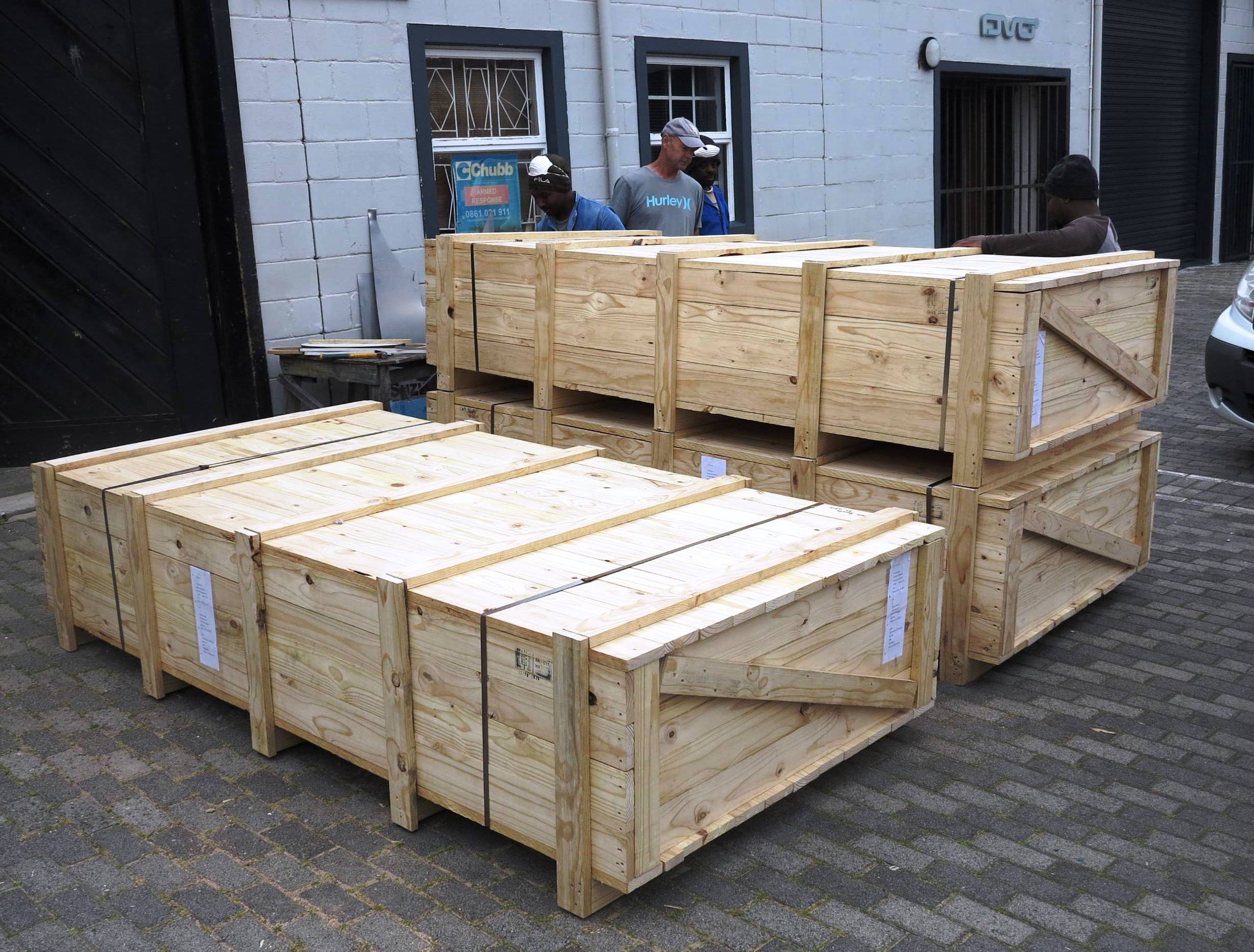
We again have export orders for more Optimists,two for this order,the more we ship the cheaper it costs for shipping due to a minimum charge hitting smaller loads,so bulking up the order,either with a second or more boat,that or adding the mast,sail,deck package,floats,bailer etc,makes it a far better value over all.Our kits are complete with a fourteen page illustrated assembly guide,we also supply a free CD for International Paints guide on paint application.At the end of the day,our pictures are the most help?

Friday 19 June 2009

The Schooner America,replica under full sail


This is a nice picture,taken in San Francisco I think.

Yachts America and Victoria in Norfolk,Virginia,USA ,1977

Left click this picture to view full size and see more details.

Lucky as I was to get a delivery trip of a yacht sailing from the Annapolis Boat Show,I hit jackpot when a fellow crew member,Charlie, offered to motor me around the waterside area of Norfolk,I could hardly believe my eyes to see these two beauties.

Moving a Didi Mini Transat part built kit boat


Turned over and ready to install the boats interior.

Arrival at our new larger premises


One of our customers may have to relocate due to a change of employment,was it safe to move his part built boat he asked? as with many such questions we can reply having done just about every job on our boats,this time we could supply pictures too,they are often worth far more than words I think?

Roy

Thursday 18 June 2009

Falcon,a converted life boat proposal sketch


We had a talented guy named Rob in Hout Bay some years back,while shop fitting design was his thing commercialy,he could envisage and sketch boats interiors and even do sketches of the same craft sailing,this is probably the first time the sketch has been published?

Monday 15 June 2009

Bronze sea cock servicing


One thing I have always used is genuine cast bronze sea cocks on any of my own boats,this may not be the lowest cost option but for peace of mind its unbeatable.Service of these is a fairly simple affair,you undo a couple of nuts,remove the center cone,re apply grease and replace the cone and refit the nuts,I normally do this when I slip the boat for an antifoul job every few years.

I used to use what ever grease was to hand,which in my case was normally Shells multi purpose Retinax A,which is a do it all type of grease used on wheel bearings and the like.This I found to work but after a year or so,the sea cock would start to tighten up,then I discoverd Duckhams waterproof grease! I bought a 500mm tub and its lasted decades,it also works over a much long period and I have never had a seized sea cock since changing to Duckhams,that has all been used up now and I have moved to Wynns water proof grease,time will tell how long that lasts?

Removal of the center cone is easy when on the hard but what about when the boat is in the water? not a good idea but when a sea cock starts to drip and a normally dry bilge is wet,what then,slipping just for a sea cock sounds expensive.In my case it also means traveling to Cape Town to use a slip,so its a big job all of a sudden.I finally decided to attempt an In the water Service,removal of the center cone was easy,the rush of incoming sea water was stopped with a rag of towling,it still leaked but not much,I then cleaned the bronze cone and lightly sanded it,applying water proof grease I then refitted it.I then had the idea to try the mandatory wooden taper plug that all boats should carry,mine are tied to each sea cock for ease of finding it in an emergency.

In this case I thought that the lanyard may hinder the plug as I had drilled through the larger end of the taper plug,removal of the lanyard and trying the plug in the sea cock prooved this to be correct and had I left the lanyard in place the plug would have stopped short of full entry and of course the water would have poured in.I now found that in this case the taper of the wooden plug was exactly the same of the sea cock body,we had a perfect match and not a drop of water now entered the boat!

I now started to consider service of all of the boats bronze sea cocks,normally a full days work in my case,this has worked well,I have now done four more and made other dicoveries as I worked.Tapers are not standard,some plugs worked to a point but did allow some entry of water,other plugs were too small in diameter and length and would not have done the job at all.

I am servicing in stages and making a note of what sea cock requires which size of wood taper plug,I also now realize that this should have been done prior to installation of the sea cocks in the first place,not as an after thought as was the case,all lanyards will be fastened to the end of the plug with a stainless steel saddle.

Options to solid bronze? They exist but use them with caution,the old type brass Gate Valve is a firm favorite with some but gate valves can block where the gate enters its internal slot,loo paper or other semi solids will do this.Others are Ball Valves,either brass,stainless or plastics,none of which are service friendly without removal of the plastic pipe that is attatched to it,plus full removal from the boats skin fitting.

Caution,never use brass as a skin fitting or sea cock,it will with time corrode and fall off one day when you try and close or open it.At the end of the day we get what we pay for,just check out the quality machine work in the selection of sea cocks I have.

Roy

Friday 12 June 2009

MV Nahlin,a 300 ft long steam boat

Go on,fill your screen with this amazing picture, left click on it to view full size!
MV Nahlin,
Seen here in Whangaroa, New Zealand circa 1930? She is now under reconstruction at Blohm + Voss in Hamburg,Germany,my thanks to John Julian for both the picture and information.

Some weeks back I posted two pictures I took of the most famous sailing boat of all (to me anyway) this was the Atlantic,which set a transatlantic crossing record under sail that stood for so long it seemed the record would never be broken? Due to the power of the world wide web yesterday I recieved a telephone call from one John Julian,a yachting journalist working in New Zealand.John is doing a story about the Atlantic,the old and I suspect the new one that has recently been launched in Holland,it is said to be an exact copy of the hull dimensions,excepting the use of modern build methods and materials means the new boat will be far faster than the original Atlantic?

John wanted permission to use my pictures taken back in 1977,this was a nice request to grant,imagine my pictures taken thirty two (32) years back will soon be in print,I was fortunate to be shown that hulk that day (thanks Charlie) and I wonder if any reader of this blog ever saw her before she was eventually cut up for scrap?

Thanks to John for this stiring picture of a motor yacht now bing restored in Germany.

Thursday 11 June 2009

A song of the sixties, Come Away Melinda

Folk singer Judy Collins,she once sang in Durban I believe.


Being a teenager in the sixties made me a target for the folk songs of that time,there was Peter,Paul and Mary,Julie Felix,Pete Seger,The Spinners (i saw them all) and many others including one Judy Collins,a lady who can sing and play like few others can,this was one of her recorded songs and while it may be some four decades on does give us food for thought with some world nations again brandishing threats of nuclear weapons.

COME AWAY, MELINDA
(Fred Hellerman and Fran Minkoff)

"Mommy, mommy, come and look and see what I have found
A little way away from here while digging in the ground."
"Come away, Melinda. Come in and close the door.
It's nothing but a picture book they had before the war."

"Mommy, mommy, come and see. Oh, mommy, come and look.
There's four or five Melinda girls inside this picture book."
"Come away, Melinda. Come in and close the door.
There were lots of little girls like you before they had the war."

"Mommy, mommy, come and see. Oh, mommy, hurry do.
There's someone grown up and tall who doesn't look like you."
"Come away, Melinda. Come in and close the door.
Your father was a man like that before they had the war."

"Mommy, mommy, come and see. Such things I've never seen.
There's happy faces all around and all the ground is green."
"Come away, Melinda. Come in and close the door.
That's just the way it used to be before they had the war."

"Mommy, mommy come and see and tell me if you can,
Why can't it be the way it was before the war began?"
"Come away, Melinda. Come in and close the door.
The answer lies in yesterday before they had the war."

Recorded by Judy Collins, Tim Rose, Harry Belafonte, The Weavers
filename[ COMELIND
GG

How to build our Optimist kit in pictures


This has been one of our best selling kits,it took a lot of development time but they go together easy enough,we supply a fourteen page builders guide with each kit,this was writen up by Janet and Nigel after building a kit themselves,they CNC cut the boats now and really do have a hands on understanding of the entire process.

Wednesday 10 June 2009

Optimist sail for sale


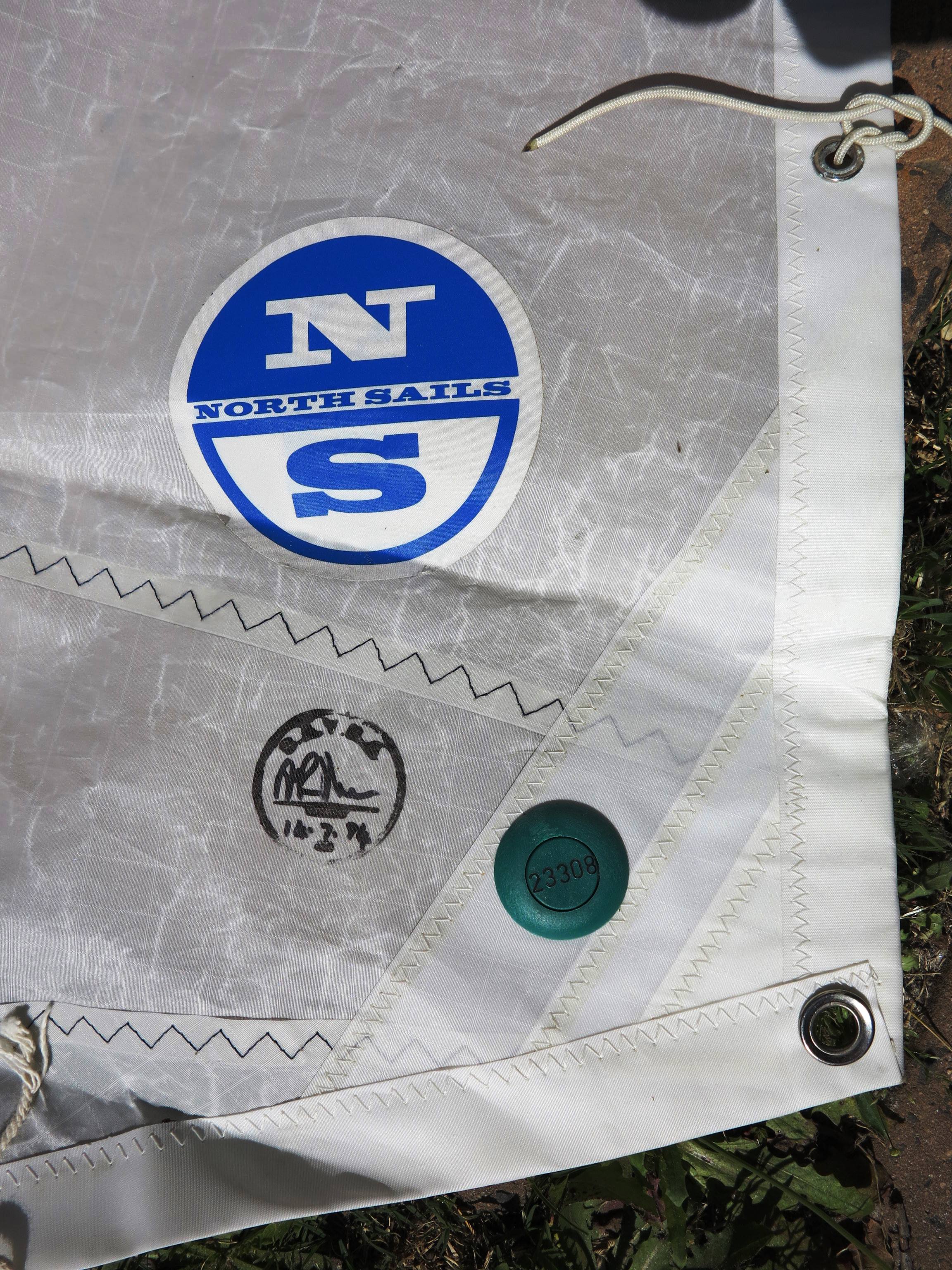
We have a very nice clean used North Sails Opimist sail that needs a new owner,it has been measured and is stamped as such,you can have it at half price of a new one,so just R785 or U$99,we can ship any place.

Tuesday 09 June 2009

Davids Didi mini cruise building


We shipped out three Didi Mini Transats in March,one went to Freemantle,Australia,David the customer and also the builder has just sent some progress pictures of what he has constructed so far.

Thin water Ausi designed yacht takes on Loch Ness


Plans and a kit available from CKD Boats,we can ship world wide.

This is a nice story about one of Micheal Storers designs,designed in Australia but built in Holland,the boat was third in a Scotish regatta it entered.

A goat island skiff came 3rd in the prestigious Caledonian RAID event in Scotland, sailed by a builder from Holland.


Having sailed GISwerk only five times prior to our departure from the Netherlands for Scotland 2 weeks ago, the Scottish lochs and canals have truly shown us what a capable boat the GIS is.

On Loch Ness we were confronted with fairly strong winds (with gusts above 20 knots and a short steep 4 ft swell) which GISwerk handled beautifully and without much problem under full sail downwind. Probably not a very sensible thing but it definitely made for a most exciting and fast surf and gained us a first place in the leg!

In the rowing legs we ended a constant third, in the sailing legs we got in 1st – 5th. The winds are very unpredictable on the Scottish lochs: a force 2 can easily become a force 6 but might over a few minutes time dwindle to force naught. Some experience in “reading” the Scottish weather would be very helpful (one day in particular we had difficulties forecasting the winds resulting in tying in an unnecessary reef causing a big delay in finishing) as would be a few more days sailing the boat before entering an event such as Raid Caledonia.

We ended a tied second (out of five boats) in class 2 and overall ended a shared third place out of 9 competing boats.

What matters most however is that we had a blast, got to know the boat fairly well sailing and rowing the boat in a lot of different conditions, met some lovely people during the event and enjoyed the fine music, food and drinks the organisation had arranged for.

JOOST

Friday 05 June 2009

Comar AIS Multi receiver

AIS-Multi
AIS Dual Channel Receiver & Antenna Splitter

I have been following the use of AIS now for some while,I think its the best bit of navigation kit any boat can have,as it tells you what ship is out there,its name,its heading and its speed,having friends crossing both the South Atlantic and the Pacific on their yachts I can confirm they use them to great success!
We can now offer the Comar range subject to availability at time of order,the Comar Multi Reciever costs R3690 plus vat (if local)thats U$462, we can post anywhere at the net cost to ourselves.

Note,some lower cost AIS units need their own VHF ariel,think about this before buying on price alone!

The AIS-MULTI is a combined AIS Dual Channel Receiver and Antenna Splitter all in one compact unit. Installation is quick and easy as it utilises the boats existing VHF Radio Antenna to provide AIS reception, thus reducing cost and time.

Wednesday 03 June 2009

Proteus 106 cat is now sailing

Left click on the picture to view full size and see more detail.
Rick on the beach at Thailands Koh Chang Island,with his Proteus 106 catamaran anchored out in the bay after a maiden voyage of some 120 miles.

This 35ft catamaran must be one of the best kit deals on the market,its based on around 135 sheets of plys and MDF boards,which are later removed,we cut all of this and also supply meranti wood for the boats stringers, the epoxy and glass cloth as per the designers materials list.

Note,the boat in the picture,at Koh Chang Island, was not made from one of our kits,it was made from templates which could add at least 400 man hours to the boats build.

Tuesday 02 June 2009

Who wants to buy an external hard drive,not me.

This is what I purchased,before you buy any external hard drive please enquire about just what the warrenty covers,such as will it cover extraction of your saved data?

Well in reality I have bought one just recently,the reason being that as I use my PCs more and more,they are filling up with data and slowing the running down,so a friend suggests I buy an External Hard Drive,I can then down load my files and save space,freeing up the computer as I do so.This made sense so checking around I see that one store offers two such units,one with a one year warrenty,the other with a two year warrenty,sounds like a better choice to me?

We have a guy (lets call him John) who has done our PC installations for many years now,so after discussing what is on offer,he suggests another unit that is locally packed,it has a three year warrenty and the company doing the distribution are specialists at retreival of data from such 'black Boxes'as in fact the hard drive inside the locally packed casing, is an international design,thats what I was told anyway.

So our John brings me a nice carton with a locally packed External Hard Drive in it,the carton is proudly showing a picture of the South African flag,saying Packed in South Africa,or words to this effect,plus I know we have a three year warrenty.We connect it to my laptop,I plug it in to the power supply that came with it,John then switches on, tries a few things to ensure its working (there is no tell tale warning light) and he leaves,I continue to down load data I may want later,I then take it home and continue to download untill space is freeing up,later that evening I close down for the day.The next morning I try to find my data in the external hard drive,it will not open and keeps asking me do I want to 'Format' which of course will erase all data saved,trying two other PCs gives me the same result,so I call John who was soon at my office and discovers the same none working issues as I did,this is after less than 24 hours of my ownership,I ask john to take it back and get a new one,and also to ask the suplliers to extract my data and put it in the new external hard drive.

John contacts me the next day,the suppliers agree to replace the faulty external hardrive but refuse to extract the data for free,I complain and suggest John asks them again,this is again refused and I am told they sent him a quote to extract the data at around R3000,which about U$375!! By now John has taken the faulty unit to his own workshops and downloaded about 3 gigs of data he tells me,what this will cost me I have yet to learn but please let me warn you,a three year warrenty is not what we think,it only covers the hard ware,not the extraction of what you have stored in it,I advise potential buyers to always ask about this side of any warrenty and make their own judgement as to buying?

Ikarus,the full story


The first name of Icaria was Dolichi but through Greek mythology it became connected to Ikarus, the first man who succeeded to fly and commemorates his fall. According to myth Daedalus, a famous craftsman, was a prisoner of Minos, the King of Crete. In an attempt to escape, he made two sets of wings, one for himself and one for his son, Ikarus, and attached them with wax. Together they secretly flew away, heading towards Athens. Out over the sea, near Ikaria, Ikarus, became excited by the view, flew too close to the sun with the result that the wax melted and he plunged into the sea and drowned. Thereafter, the sea named after him, Ikario Pelagos and the island was named Ikaria.


E-mail: ikaria@ikaria.gr Copyright N. Michael info tel. +30 2273030202 fax +30 2273030600 e-mail: webmaster@aegean-news.gr

Monday 01 June 2009

The first man to fly? Percy Pilcher RN.


Percy Pilcher.
Percy Pilcher's Flying Machine - programme summary
Could an unknown Englishman have been the first person ever to fly?

"I think he was just totally fascinated with the idea of flying"
Philip Jarrett, Aviation Historian
To mark the hundredth anniversary of the Wright brothers inaugural flight, Horizon tells the remarkable story of Percy Pilcher.

He could have been the most famous aviator of them all. Four years before the Wright brothers, he had constructed his own aeroplane. But on the day it was due to take off for the very first time, something so terrible happened that he was denied the chance of ever flying it. So Horizon has rebuilt his long lost flying machine to see if Percy Pilcher, the British amateur, could have claimed the glory and been the first person ever to fly.

This film mixes dramatic reconstruction with fabulous contemporary scenes and gripping science. With a specially assembled team of historians, aviation experts and our own test pilot, Horizon painstakingly rebuilds Pilcher's flying machine and puts it to the test. The results will leave you cheering.


alt=""id="BLOGGER_PHOTO_ID_5342351590910661970" />


We have probably all heard the tale of Ikarus who made himself into a bird by sticking feathers all over himself with wax,seems it worked very well too,then he got so close to the sun that the wax melted and he lost all his feathers as the wax melted with the suns heat,he fell to the ground of course,there is a message in this tale I am sure,wonder what it is?

Photos were taken by my good friend Notty,thanks mate!

As we know it the first man/men to fly was of course the Wright brothers,thats what we are toldin the history books,was this correct though? as a display at Stanford Hall in England, shows a man clearly flying in what was really a glider,this started in 1885 and continued through to 1899 but the day he was to demonstrate his power propelled air plane,he crashed his glider and was injured so badley that he died of his injuries the next day and this was before the Wright brothers started gliding in 1900 and then only made their record powered flight in 1903.

Percy Pilcher
From Wikipedia, the free encyclopedia
Jump to: navigation, search
Percy Sinclair Pilcher (16 January 1866 — 2 October 1899) was a British inventor and pioneer aviator who was his country's foremost experimenter in unpowered flight at the end of the 19th Century. He was planning a flight with a motor-driven hang glider, but died in the crash of another glider before he could make the attempt.
Career

Percy Pilcher flying his Hawk hang glider. UK, 1897. Shown might be Miss Dorothy Pilcher, Percy's cousin who was towed in a flight.In 1891 Pilcher began work as assistant lecturer at Glasgow University and took a growing interest in aviation. He built a hang glider called The Bat which he flew for the first time in 1895;[1] the Bat had a double use of the triangle control frame (TCF) (or A-frame for hang gliders, trikes, and ultralights) as both a piloting device as well as an airframe part that doubled in kinposting utility. Later that year Pilcher met Otto Lilienthal, who was the leading expert in gliding in Germany. These discussions led to Pilcher building two more gliders, The Beetle and The Gull.[2] Based on the work of his mentor Otto Lilienthal, in 1897 Pilcher built a glider called The Hawk with which he broke the world distance record when he flew 250 m (820 ft) at the grounds of Stanford Hall near Lutterworth in Leicestershire, England.
Pilcher set his sights upon powered flight: he developed a triplane that was to be powered by a 4 hp (3 kW) engine; however, construction of the triplane put him heavily into debt, and Pilcher needed sponsorship to complete his work.


Funerary monument, Brompton Cemetery, London
Monument near Stanford Hall at the point where Pilcher crashed his gliderPilcher formed a company with Walter Gordon Wilson (later to become a successful motor engineer and inventor of the first tanks).


[edit] Death
On 30 September 1899, having completed his triplane, he had intended to demonstrate it to a group of onlookers and potential sponsors in a field near Stanford Hall. However, days before, the engine crankshaft had broken and, so as not to disappoint his guests, he decided to fly the Hawk instead. The weather was stormy and rainy, but by 4pm Pilcher decided the weather was good enough to fly[3]. Whilst flying, the tail snapped and Pilcher plunged 10 metres (30 ft) to the ground: he died two days later from his injuries with his triplane having never been publicly flown.[4]

He is buried in Brompton Cemetery, London.


[edit] Legacy
A stone monument to him stands in the field near Stanford Hall at the point where he crashed, and a full sized replica of his "The Hawk" glider is also displayed at Stanford Hall.


[edit] Renewal of interest
Pilcher's plans were lost for many years, and his name was also long forgotten except by a few enthusiasts. When the centenary of the Wright brothers' flight approached, a new effort was made to find the lost work, and some correspondence was found in a private American collection. From this it was possible to discern the general direction of his plans and the basis of his design. Based on Lilienthal's work, Pilcher understood how to produce lift using winglike structures, but at this time a full mathematical description was years away, so many elements were still missing. In particular, Pilcher was stuck trying to design a wing that could lift the weight of an engine, the aircraft itself and the occupant - each increase in wing area increased the weight so much that yet more lift was required, requiring a larger wing - a seemingly vicious circle. Pilcher's breakthrough, thanks to correspondence with another pioneer, Octave Chanute, was to stack smaller, lighter wings one atop the other in an arrangement we know today as the biplane or triplane. This allowed the wings to generate much more lift without a corresponding increase in weight.

In 2003, a research effort carried out at the School of Aeronautics at Cranfield University, commissioned by the BBC2 television series "Horizon", has shown that Pilcher's design was more or less workable, and had he been able to develop his engine, it is possible he would have succeeded in being the first to fly a heavier-than-air powered aircraft with some degree of control. Cranfield built a replica of Pilcher's aircraft and added the Wright brothers' innovation of wing-warping as a safety backup for roll control. Pilcher's original design did not include aerodynamic controls such as ailerons or elevator. After a very short initial test, the craft achieved a sustained flight of 1 minute and 25 seconds, compared to 59 seconds for the Wright Brothers' best flight at Kitty Hawk. This was achieved under dead calm conditions as an additional safety measure, whereas the Wrights flew in a 25 mph+ wind to achieve enough airspeed on their early

Kayak progress by Alain


Some while back we posted some pictures of customer Alains progress on his kayak,its not one of our kits,we only supplied his materials,this is fine by us,materials as they are or we can cut to size given a cut file and that you have paid for the plans.Alain must be nearly finished now as last week we supplied him with 4oz woven glass cloth and some more epoxy so that the hull can be skinned over.

Thursday 28 May 2009

Wanted a B and G 12 Volt Network auto pilot ram


Does anyone have or know where to find what is now quite and old bit of kit,it will power a yachts rudder when connected to my Network system.I am told that other makes will do the same job,Simrad,Furuno and Raymarine,others,its technical name is a Linear drive hydraulic ram,suitable for craft over 12 tons.Other parts of the same Network B & G autopilot also considered,repeaters and function control etc.

Contact me at roy@comlumber.com or phone on Cape Town 021 510 7206,if I am not in the office,please leave a message.

Wednesday 27 May 2009

Tall ship the Bark Marques


This tall ship was in Salvador Harbour,Brasil in 1977,I was told they wanted crew to go around Cape Horn,I declined as I was going north and knew that nothing goes to windward better than a Boeing 747.

In 1971 Englishman Robin Cecil-Wright bought the Marques and had her extensively repaired and re-rigged in Southhampton, England. She saw use in movies, most notably Dracula, and in television shows such as the The Onedin Line and Poldark. In 1977 Mark Litchfield bought a one-half share in the ship. She was again re-rigged, this time as a barque, largely for her part in the BBC documentary on Charles Darwin as his ship, the HMS Beagle. At this time she was renamed the Bark Marques.

Sadley she was later lost with many hands:

In 1983 she sailed from Bristol, England, to Antigua in the Caribbean for use in charter tours during the northern winter. In the summer of 1984 she sailed to San Juan, Puerto Rico to compete in the Cutty Sark Tall Ships' Races.

The Bark Marques won the first tall ships' race, from Puerto Rico to Bermuda. The ship left Hamilton on the second race, bound for Halifax, Nova Scotia, on 2 June, 1984. On the night of 2 June the ship ran into a gale. In the early hours of 3 June she was hit by a sudden squall and a large wave, possible a rogue wave, and was knocked down onto her side. Although the ship had been converted to a sail training and charter cruise ship, she had retained the main cargo hatch from her days as a commercial vessel. When she was knocked down the main hatch was breached and water flooded into the interior of the ship. She sank in less than a minute, with the loss of 19 of her 28 crew members.

Surinam,the wooden house


Note the Rolls Royce (VW Beetle) to the left of the screen! click on the picture to view full size.

Rain and a lady in Surinam


We were both sheltering from a serious down pour,arriving at the right place at the right time to stay dry.

Vendredi 13,a very large yacht


Friday 13th,an unusual name to call a yacht of any sort,I found her in the dry dock at Martenique,its impossible not to be impressed!

Monday 25 May 2009

In favour of AIS

Left click on any picture to view full screen size!

We sighted Texaco Brasil when she was not so far off,not quite on a collision course but close enough.

We were this close!

Those who do not have a radar would be well advised to invest in an AIS receiver,with ships known not to keep the best of watches on an ocean passage,its now your best form of defence as you will be alerted to the ship,the heading,speed and even its name will be supplied to you.If we had had such a device we would have called the tanker ship Texaco Brasil a long time before we saw her.

Wednesday 20 May 2009

That other ship America


In this case the huge 'US 66 America' aircraft carrier,a fantastic photograph taken in St Maarten,West Indies around 1994/5 by my good friend Notty,yacht Jacana,by then there was a half kilometer exclusion zone around the ship,so this telephoto lens shot he took was a near as he got,we were lucky to be invited on board in the years before.

I asked Notty to pin point the date that US America was there,this is as close as he can get,does any crewmember have the correct date for me?

The nearest I can pin down the time is by working backwards, we were outside Simpson Bay Lagoon at the time so must have been preparing to leave St Marten. We arrived in the Azores after a 25 day trip, well in time for my Birthday on 26th July where we held a little party so we must have left St. Marten sometime in June. So the shot was taken in May or June 1995.
There is no information on the slide to say which camera took it but I think it may have been Dion's Cannon using a standard 50-mm lens and normal film as my Cannon had grown algae on the lens by then.

The First Fleet into Jamestown,USA,circa 1607


A Roy McBride photo,taken with a Canon FT camera and a 1.4 50mm lens.

On a visit to the USA IN 1977,I was surprised to see such a dedicated approach to the reconstruction of Americas first settlement town in Virginia,a full village had been constructed but also a sea port with three real ships,do they still exist?

Jamestown Colony
First years (1607-09)
English colony, North America
First years (1607–09)
Most Indian tribes of the region were part of the Powhatan empire, with Chief Powhatan as its head. The colonists’ relations with the local tribes were mixed from the beginning. The two sides conducted business with each other, the English trading their metal tools and other goods for the Native Americans’ food supplies. At times the Indians showed generosity in providing gifts of food to the colony. On other occasions, encounters between the colonists and the tribes turned violent, and the Native Americans occasionally killed colonists who strayed alone outside the fort.

On May 21, 1607, a week after the colonists began occupying Jamestown, Newport took five colonists (including Smith) and 18 sailors with him on an expedition to explore the rivers flowing into the Chesapeake and to search for a way to the Pacific Ocean. On returning, they found that the colony had endured a surprise attack and had managed to drive the attackers away only with cannon fire from the ships. However, when Newport left for England on June 22 with the Susan Constant and the Godspeed—leaving the smaller Discovery behind for the colonists—he brought with him a positive report from the council in Jamestown to the Virginia Company. The colony’s leaders wrote, and probably believed, that the colony was in good condition and on track for success.

The report proved too optimistic. The colonists had not carried out the work in the springtime needed for the long haul, such as building up the food stores and digging a freshwater well. The first mass casualties of the colony took place in August 1607, when a combination of bad water from the river, disease-bearing mosquitoes, and limited food rations created a wave of dysentery, severe fevers, and other serious health problems. Numerous colonists died, and at times as few as five able-bodied settlers were left to bury the dead. In the aftermath, three members of the council—John Smith, John Martin, and John Ratcliffe—acted to eject Edward-Maria Wingfield from his presidency on September 10. Ratcliffe took Wingfield’s place. It was apparently a lawful transfer of power, authorized by the company’s rules that allowed the council to remove the president for just cause.

Shortly after Newport returned in early January 1608, bringing new colonists and supplies, one of the new colonists accidentally started a fire that leveled all of the colony’s living quarters. The fire further deepened the colony’s dependence on the Indians for food. In accord with the Virginia Company’s objectives, much of the colony’s efforts in 1608 were devoted to searching for gold. Newport had brought with him two experts in gold refining (to determine whether ore samples contained genuine gold), as well as two goldsmiths. With the support of most of the colony’s leadership, the colonists embarked on a lengthy effort to dig around the riverbanks of the area. Councillor John Smith objected, believing the quest for gold was a diversion from needed practical work. “There was no talke, no hope, no worke, but dig gold, refine gold, load gold,” one colonist remembered.

During the colony’s second summer, President Ratcliffe ordered the construction of an overelaborate capitol building. This structure came to symbolize the colony’s mismanagement in the minds of some settlers. With growing discontent over his leadership, Ratcliffe left office; whether he resigned or was overthrown is unclear. John Smith took his place on September 10, 1608. To impose discipline on malingering colonists, Smith announced a new rule: “He that will not worke shall not eate (except by sicknesse he be disabled).” Even so, the colony continued to depend on trade with the Indians for much of its food supply. During Smith’s administration, no settlers died of starvation, and the colony survived the winter with minimal losses. In late September 1608 a ship brought a new group of colonists that included Jamestown’s first women: Mistress Forrest and her maid, Anne Burras.

In London, meanwhile, the company received a new royal charter on May 23, 1609, which gave the colony a new form of management, replacing its president and council with a governor. The company determined that Sir Thomas Gates would hold that position for the first year of the new charter. He sailed for Virginia in June with a fleet of nine ships and hundreds of new colonists. The fleet was caught in a hurricane en route, however, and Gates’s ship was wrecked off Bermuda. Other ships of the fleet did arrive in Virginia that August, and the new arrivals demanded that Smith step down. Smith resisted, and finally it was agreed that he would remain in office until the expiration of his term the following month. His presidency ended early nonetheless. While still in command, Smith was seriously injured when his gunpowder bag caught fire from mysterious causes. He sailed back to England in early September. A nobleman named George Percy, the eighth son of an earl, took his place as the colony’s leader.

The sailing yacht America,a replica

Left click on this image to view full screen size!

Seen here in Norfolk,Virginia,in 1977,this was a highlight and a major discovery for myself,taken with my Canon FT and a 200mm tele lens,using Kodaks Ektachrome slide film,copy right exists on this picture taken by Roy McBride.

Sunday 17 May 2009

Salvador,cruising up the river with yacht Donella

Left click any picture to view full size,all pictures are taken with a Canon FT 35mm camera and a 50mm lens,using Kodaks Ektachrome slide film and are the property of Roy McBride.

Donella at her best,Chris knew what he wanted and found her in the UK,went over to buy her,then returned to South Africa and entered the Cape To Rio race.

We took the advantage of a full tide to go up river.

Claudia,Anija,Christian,in that order.

We took a lunch break here and discovered a local farmer brewed his own liquers,it was a memorable tasting session!

We were on Brer Terrapin one early morning,going up the river to a small village named Magrogipie,with us was Chris and his family,thats Claudia (cloudy) having her morning coffee,this was cruising at its best!Donnella,an all teak build Laurent Giles design was lost some years back when she hit a reef in the South Pacfic,the crew were fine,the locals stole as much as they could from the boat but I think Chris mangaged to salvage a lot of the boats gear? the story was in Cruising World magazine.

US 66 America,more pictures in Salvador,Bahia,Brasil,1977


Left click on any image to view fullscreen size.

All images by Roy McBride,using a Canon FT SLR camera and Ektachrome slide film,this image was with a 200mm tele lens.


Inside under the main flight deck,what type of planes are we looking at?

I was searching for the pictures of the 1903 SV Atlantic,when I discovered some more photos taken when the aircraft carrier,US 66 America was in Salvador,I know ex crewmen check for such pics,now and again,so here they are,please let me know what class of fighter plane and helicopter we are viewing?